


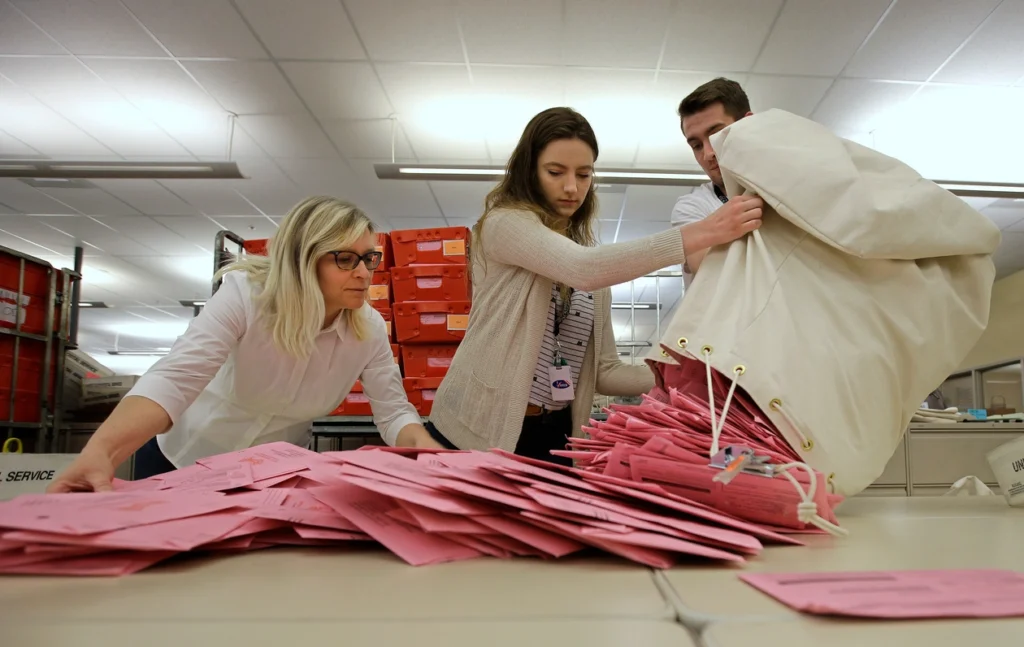
California Voter ID Measure Officially Qualifies for November 2026 Ballot
The California voter ID measure has officially earned a spot on the November ballot, setting the stage for what could become one of the most closely watched political fights of the year. After months of signature gathering and political maneuvering, the proposal will now be placed in the hands of California voters, who will decide whether the state should add a voter identification requirement to its constitution.
This is a significant moment for a state that has long been considered one of the most progressive in the country on voting access. If approved, the measure would represent a major shift in how Californians cast their ballots and could have ripple effects on similar debates happening across the United States.
What the Measure Would Actually Do
The proposal, brought forward by Assemblymember Carl DeMaio, a Republican from San Diego, would do more than just require voters to show ID at the polls. Its provisions are broader than many people may initially realize. Specifically, the measure would:
- Require voters to present identification at polling places when voting in person
- Require an identification number to be included on mail-in ballots
- Make county registrars responsible for verifying that registered voters are citizens
- Establish stronger auditing procedures for voter rolls
In simpler terms, the measure aims to introduce verification steps at multiple points in the voting process. Supporters describe it as a comprehensive election integrity package, while opponents argue it could create unnecessary barriers to participation.
How It Qualified for the Ballot
To make it onto the ballot, the campaign needed approximately 875,000 valid signatures. According to the Secretary of State’s Office, the measure cleared that threshold with room to spare, gathering more than 962,000 valid signatures.
That kind of signature count is no small feat in California. It signals that the campaign was well organized, well funded, and tapped into a real wave of voter interest. DeMaio celebrated the qualification on social media, framing it as a chance for Californians to take a meaningful step toward what he describes as restoring election integrity in the state.
Why This Issue Has Gained New Traction
California currently does not require voters to show identification at the polls. Republican efforts to change that have come up short multiple times in the past, largely because of the state’s strongly Democratic political environment. So why is this attempt different?
Part of the answer lies in the broader national political climate. Voter ID laws have become a major rallying point for Republicans across the country, with former President Donald Trump leading much of the charge. While claims of widespread election fraud remain unproven, the political energy around voter ID has continued to grow.
This momentum has trickled into California, where supporters of the measure see an opportunity to align the state with the rest of the country. Most US states already have some form of voter identification requirement, and proponents argue that California is an outlier on this issue.
The Argument From Supporters
Those backing the measure say it would do several positive things for the state’s elections. According to supporters, requiring voter ID would:
- Boost public confidence in election results
- Bring California in line with the majority of other states
- Provide tangible safeguards against potential fraud
- Strengthen the integrity of voter rolls through citizenship verification
- Create accountability through more rigorous auditing
For DeMaio and his allies, this is about more than partisan politics. They argue that even if fraud is rare, putting strong verification systems in place strengthens trust in the democratic process.
The Argument From Opponents
Critics of the measure see it very differently. They argue that voter fraud is exceedingly rare in California and that adding new ID requirements could disenfranchise legitimate voters, particularly those from communities that face barriers to obtaining identification.
Opponents make several key points:
- Voter fraud cases in California are extremely uncommon
- ID requirements can disproportionately affect elderly, low income, and minority voters
- Mail-in ballot ID rules could disqualify ballots due to clerical issues
- The measure could be part of a broader national effort to suppress turnout
- Implementation costs and administrative burdens could be significant
The disagreement between the two sides goes beyond procedure. It reflects a deeper debate about whether the bigger threat to democracy is potential fraud or potential voter suppression.
The Polling Tells a Complicated Story
Polling around the measure shows that public opinion is far from settled, and how the measure is described to voters can dramatically change support levels.
A March poll from the Berkeley Institute of Governmental Studies showed:
- 44 percent of voters surveyed in favor of the measure
- 45 percent against it
- 12 percent undecided
That is essentially a tie, which already suggests that the campaign ahead will be tightly contested. But a newer IGS poll released Friday revealed something even more striking. When voters were asked about the ID requirements on their own, support jumped to 56 percent in favor and 39 percent opposed.
However, when the measure was framed in partisan terms, the numbers flipped completely. After voters heard about DeMaio’s fraud concerns alongside Democratic arguments that the proposal is part of a Trump-backed effort to suppress voters of color, support dropped to 39 percent and opposition rose to 52 percent.
This dramatic swing tells us something important. The outcome of this measure may depend less on the actual policy details and more on how each side manages to frame the debate.
Money Will Matter in This Fight
If this campaign comes down to messaging and visibility, then funding could be a decisive factor. So far, the supporters of the measure have a significant financial advantage. The Californians for Voter ID ballot measure committee raised about 8.8 million dollars last year.
A large share of that money came from DeMaio’s Reform California ballot measure committee. But the campaign also picked up a major boost from Republican megadonor Richard Uihlein, the heir to the Schlitz beer fortune, who contributed 4 million dollars in December.
On the other side, opposition efforts are still in their early stages. The Californians for Voting Rights account, started by the California Donor Table and the ACLU of Northern California, has raised only about 270,000 dollars so far. That is a substantial gap that opponents will need to close quickly if they hope to mount a serious counter campaign.
A Question of Trust in Elections
At its core, this debate is really about trust. Supporters of the measure believe that adding more verification steps will help build public confidence in election outcomes. Opponents worry that introducing new barriers could erode that confidence in a different way by making it harder for legitimate voters to participate.
Both sides claim to be defending the integrity of the system. They simply disagree on what that integrity actually requires.
The National Context
It is impossible to fully understand this measure without looking at the national context. Voter ID has become one of the defining political issues of the past decade. As more states have introduced ID laws, debates about their effects have grown louder.
Republicans have argued that voter ID is common sense and widely supported. Democrats have responded that many such laws are designed to limit turnout among groups that lean Democratic. California’s potential adoption of voter ID rules would be especially symbolic given its position as a national stronghold for the Democratic Party.
What Could Happen if the Measure Passes
If voters approve the measure in November, California would join the majority of US states that already require some form of voter identification. The change would take time to implement and would require substantial coordination between state and county officials.
Some of the practical questions that would need to be answered include:
- What forms of identification would be considered acceptable?
- How would voters without ID be accommodated?
- What happens if a mail-in ballot is missing the required identification number?
- How would counties verify the citizenship status of every registered voter?
- What are the costs of implementing the new system?
These are not small questions, and how they are answered could determine whether the measure delivers on its promises or creates new problems.
What Could Happen if the Measure Fails
If the measure is rejected, California would continue with its current approach to elections. But the debate would not necessarily end there. Republican groups could pursue similar efforts in the future, and the issue could continue to be a flashpoint in state politics.
Failure could also signal that California voters remain firmly committed to expanding access rather than introducing new requirements. That message would carry weight far beyond California’s borders, given the state’s influence on national political conversations.
Key Takeaways
To summarize the most important points about this story:
- The California voter ID measure has officially qualified for the November ballot.
- It would require ID at polling places, ID numbers on mail-in ballots, and citizenship verification.
- The measure was brought forward by Republican Assemblymember Carl DeMaio.
- Supporters say it boosts election integrity, while opponents warn of voter disenfranchisement.
- Polls show support depends heavily on how the measure is framed.
- Supporters have raised significantly more money than opponents so far.
- The outcome could have national implications for the broader voter ID debate.
Final Thoughts
The California voter ID measure has set the stage for a defining political moment. Voters will not just be deciding on a policy detail. They will be making a statement about how they view trust, access, and integrity in their elections. Both sides will spend the coming months trying to convince Californians that their vision is the right one.
Whether the measure passes or fails, the debate it has already sparked is unlikely to fade. Conversations about voter ID, election security, and voter access have become permanent features of American political life. November will provide a critical test of where one of the largest and most influential states in the country stands on these questions.
For now, both supporters and opponents are gearing up for a long campaign. With significant money, strong emotions, and major national stakes involved, this measure is shaping up to be one of the most important issues on the California ballot this year.