


Chernobyl Russia Drone Attack Reawakens Decades-Old Fears at Site of Worst Nuclear Disaster
The Chernobyl Russia drone attack has thrust one of history’s most infamous nuclear sites back into the global spotlight, reigniting fears that many believed were finally being put to rest. Forty years after the original disaster shook the world, the legendary Ukrainian nuclear plant faces a new kind of threat — one that comes not from technical failures but from the brutal realities of war.
Two explosions at Chernobyl, separated by nearly four decades, tell a story of how human conflict and natural disaster can intersect in terrifying ways. The first changed the world forever. The second has reminded everyone that Chernobyl’s troubled story is far from over.
Two Explosions, Decades Apart
The original explosion at Chernobyl occurred at 1:23 a.m. on April 26, 1986. The catastrophic accident at Reactor No. 4 spread a cloud of deadly radiation across what is now Ukraine and Belarus, sending alarm rippling across Europe and shaking the very foundations of the Soviet Union. Some historians believe the disaster contributed to the eventual collapse of the USSR.
The second explosion came at 1:59 a.m. on February 14, 2025. This time, Ukrainian officials blamed a Russian drone armed with an explosive warhead. While significantly less catastrophic than the original disaster, the strike sparked new anxieties about Moscow’s invasion of Ukraine and demonstrated that even sites symbolizing humanity’s most painful nuclear lessons are not immune to the realities of modern warfare.
Oleh Solonenko, head of a radiation safety shift at Chernobyl, captured the gravity of the moment perfectly. According to him, what once seemed unthinkable — strikes on nuclear facilities and other hazardous sites — has now become reality.
The Target: A Massive Engineering Marvel
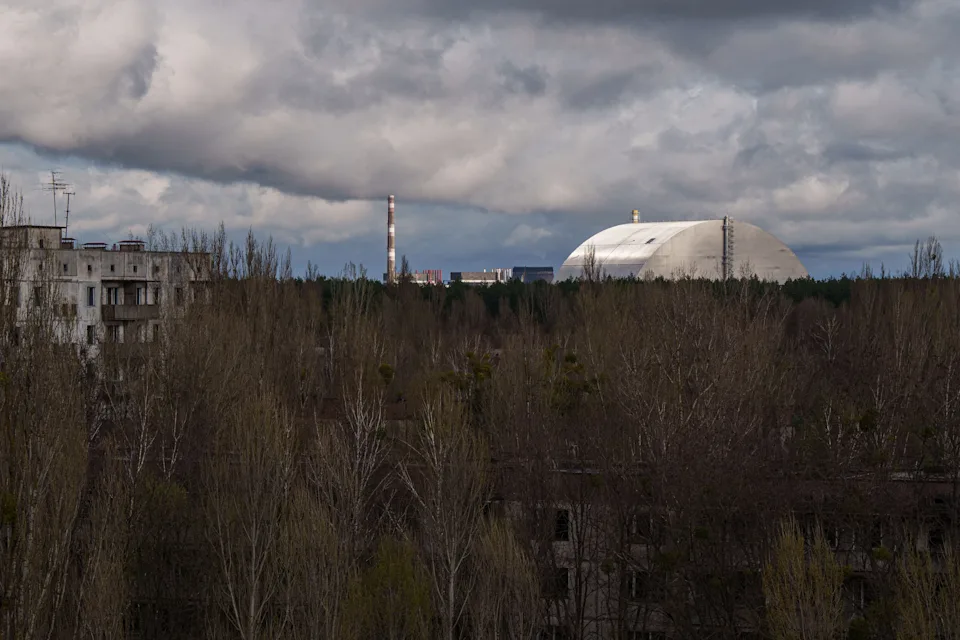
The drone struck the outer layer of what is known as the New Safe Confinement structure, or NSC. This vast $2.1 billion arch-like shell was completed in 2019 to enclose the original, hastily built concrete sarcophagus that had been protecting Reactor No. 4 and its deadly debris for decades.
The scale of the NSC is genuinely impressive. The structure is tall enough to cover the Statue of Liberty entirely, and it represents one of the most ambitious nuclear safety projects in human history. International cooperation made it possible, with countries around the world contributing funds and expertise to address the slow deterioration of the original Soviet-era sarcophagus.
The drone strike caused a fire on the structure but did not fully penetrate it. The damage occurred in an area with low contamination, and monitors detected no rise in radiation levels outside the arch. Thankfully, no one was injured in the incident. Moscow denied targeting the plant and alleged that Kyiv had staged the attack — claims rejected by Ukrainian officials and international observers.
Why the Damage Matters
Despite the lack of immediate radiation release, the International Atomic Energy Agency has warned that the damage could significantly shorten the arch’s 100-year lifespan. This is a serious concern because the NSC’s core safety function depends on its long-term integrity.
The IAEA found that the damage has left the arch unable to fully perform its essential functions of containing radioactive material and enabling the safe dismantling of the reactor remains. If left unrepaired, the structure would gradually weaken over time, increasing radiation exposure risks not just to Ukraine but to other countries as well.
This isn’t just a Ukrainian problem. Radiation respects no borders, and any failure of the Chernobyl containment system could have consequences across Europe and beyond. The international stakes of maintaining the site are as high as ever.
Memories Reawakened
For Klavdiia Omelchenko, who works alongside over 2,200 engineers, scientists, and other professionals at the defunct plant, the drone strike rekindled memories of a horrible spring day 40 years ago.
In 1986, Omelchenko was just 19 years old and working at a textile factory. She lived in Pripyat, the company town where most of Chernobyl’s workers and their families resided. She slept through the explosion at Reactor No. 4 during the routine test that triggered the disaster.
She woke to rumors of an accident, but it took weeks before she truly understood the scale of what had happened. By then, she had been evacuated with little more than a small bag containing her documents and some cosmetics. Her former home became part of Chernobyl’s exclusion zone — a 2,600-square-kilometer area (about 1,000 square miles) that remains uninhabited to this day.
The Soviet authorities famously delayed revealing the full scope of what became known as the world’s worst nuclear disaster. The radiation cloud that spread over Ukraine, Belarus, and beyond caused alarm across Europe. Dozens of people died in the immediate aftermath, while the long-term death toll from radiation exposure remains unknown and debated.
Omelchenko never found another permanent home, and she returned to work at the plant’s cafeteria in 1993. As she put it, that return wasn’t nearly as frightening as the current situation. Back then, at least, there was no bombing.
The Workers Who Stayed Through the Invasion
The story of Liudmyla Kozak, an engineer who has worked at Chernobyl for over two decades, illustrates the human cost of the Russian invasion. She was on duty when Russian troops seized the plant in February 2022, beginning what would become a harrowing three-week ordeal.
During the occupation, plant staff kept critical operations running under armed guard. Workers were exposed to radiation doses well beyond the limits of their normal rotation schedules. Kozak described the experience starkly, saying they had no hope of making it out alive — that’s how scary it really was.
Workers slept on floors and desks while Russian soldiers occupied key areas of the facility. Equipment was damaged and stolen. Russian troops drove heavy vehicles through contaminated areas and dug trenches, stirring up radioactive dust that had been settled for decades.
Now, with the additional drone strike damage, Kozak says everything will be much more complicated. The accumulated impacts of the invasion and the strike have created challenges that will take years to address.
The Night of the Drone Strike
Serhii Bokov, who oversees operations for the New Safe Confinement, was on duty early on February 14, 2025, when the dull blast from the drone rippled through the structure. He and his colleagues ran outside, smelling smoke but initially seeing nothing visible.
A nearby military checkpoint confirmed that a strike had occurred, and firefighters arrived approximately 40 minutes later. Climbing up into the structure, they finally located the source — fire smoldering through the outer membrane.
Hoses were stretched across the arch as crews battled flames that kept resurfacing. Despite their efforts, it took more than two weeks to fully extinguish the fire. Even more impressive than this practical achievement was the calm professionalism of the workers responding.
Bokov said there was no feeling of fear at all during the response. According to him, it was just a fire — something they practice in drills regularly — only this time it was real. Honestly, he said, he didn’t think they could actually lose the entire arch.
The Damage Today
Walking through the NSC today reveals both the resilience of the structure and the marks left by the attack. The damage has been patched and hidden on the inside, but a sealed breach remains visible on the outside as a permanent reminder of what happened.
Every night, Bokov walks more than a kilometer (about 1,100 yards) through the structure via what workers call the “golden corridor.” This passageway is lined with yellow panels designed to shield workers from radiation exposure. The corridor passes abandoned control rooms, including that of the infamous Reactor No. 4 itself.
When the NSC was completed in 2019, Bokov was proud of being part of something extraordinary. He had watched the structure rise and take shape, and being a member of the team keeping it running gave him a deep sense of accomplishment. Now, however, the structure is no longer fully sealed, and his work has taken on new urgency.
Dismantling Plans on Hold
Perhaps the most concerning consequence of the drone strike is the impact on plans to dismantle the original sarcophagus underneath the NSC. While there’s no immediate radiation risk, work on dismantling the deteriorating Soviet-era structure is now on hold.
According to Bokov, this setback could delay the work by at least a decade. Everything depends on how quickly Ukraine can restore the structure and return to normal operations, then prepare for the dismantling work that was originally planned.
The original sarcophagus is itself a serious concern. It was hastily built in the immediate aftermath of the 1986 disaster and was never intended to be a permanent solution. Decades of weathering and aging have made it increasingly unstable. The NSC was specifically designed to allow for the safe dismantling of this older structure, but that work cannot proceed safely while the arch itself is compromised.
The Stakes of Inaction
Without urgent repairs, the risk of the sarcophagus collapsing significantly increases. Greenpeace Ukraine has warned about this in a detailed report by engineer Eric Schmieman, who spent years at Chernobyl and actually helped design the NSC.
Schmieman’s assessment is sobering. He noted that it’s difficult to comprehend the scale of the deadly, hazardous conditions inside the sarcophagus. There are tons of highly radioactive nuclear fuel, dust, and debris contained within. Restoring the key functions of the facility has become critical.
If the sarcophagus were to collapse, the consequences could be devastating. Decades of contaminated material that had been carefully contained could be redistributed across the surrounding area, potentially creating a new disaster on top of the original.
Life in the Shadow of Chernobyl
For Omelchenko and others who have spent much of their lives near Chernobyl, the modern Russian invasion and last year’s drone attack are more frightening than the radiation itself. After years of living and working in the contaminated zone, many workers have developed what might be called a familiar relationship with the dangers.
Omelchenko mentioned getting headaches after the 1986 accident and later having surgery for a precancerous condition. But at age 59, she dismisses the risk of contamination. She and her colleagues grew up in this environment and don’t pay much attention to it anymore.
This isn’t denial — it’s a kind of pragmatic acceptance born from decades of experience. The radiation is a known quantity, monitored constantly and managed with established protocols. The unpredictable violence of war is something entirely different and much more terrifying.
Yellow Daffodils and Wartime Fortifications
The current state of the Chernobyl plant tells a strange story of normalcy and conflict coexisting. Yellow daffodils bloom beside wartime fortifications. Workers in ordinary clothes, carrying badges and special permits, pass through the restricted zone going about their daily duties.
The plant has not produced electricity since 2000, when the last of four reactors was finally shut down. The work now is entirely about safety and containment — preventing the radioactive legacy of 1986 from causing further harm to current and future generations.
This work was difficult enough before the war. The full-scale Russian invasion in 2022 and the drone attack of 2025 have made it dramatically more challenging. International support for Chernobyl’s containment efforts now must navigate the complexities of an active conflict zone.
What This Means for Nuclear Safety Globally
The Chernobyl drone attack has implications that extend far beyond Ukraine. The incident represents a troubling new precedent — military attacks on nuclear facilities, even those that no longer produce electricity, can no longer be ruled out as unthinkable.
This raises serious questions about how the international community should respond to threats against nuclear sites. Existing international frameworks were developed during peacetime and may not be adequate to handle scenarios where active conflicts threaten nuclear safety infrastructure.
Other nuclear facilities in Ukraine have also faced threats during the Russian invasion. The Zaporizhzhia Nuclear Power Plant, Europe’s largest nuclear facility, has been a particular concern as it remains under Russian control. The international community has watched these situations with mounting alarm, recognizing that the consequences of a serious incident could be catastrophic.
Looking Forward
Despite the challenges, the workers at Chernobyl continue their important mission. The drone damage has been patched, even if not fully repaired. Operations continue, even under difficult circumstances. The dismantling work is paused, but plans for eventually completing it remain.
Bokov believes the arch can continue functioning in its current state for some time, but the real concern is the stability of the sarcophagus beneath it. This is why resuming the dismantling work is so urgent, even as the war continues to complicate matters.
International cooperation will be essential for Chernobyl’s future. The original NSC project required global participation, and the same will be true for any repairs and continued safety work. Whether such cooperation can be sustained during ongoing conflict remains an open question.
The Human Element
What stands out throughout the Chernobyl story is the dedication of the people who work there. From those who responded to the original 1986 disaster to those keeping the plant safe today, these workers have repeatedly put themselves in harm’s way to protect others from radiation.
Their courage is matched by their pragmatism. They understand the risks they face and they continue their work anyway because they know its importance. The site that symbolizes one of humanity’s worst technological disasters has become a place of ongoing service to global safety.
These workers are now navigating the additional challenges of war, balancing their normal duties with the unprecedented stress of operating in a conflict zone. Their resilience is genuinely inspiring, and their work matters tremendously to the safety of millions of people.
Final Thoughts
The Chernobyl Russia drone attack has done more than damage a single nuclear facility — it has reawakened deep fears about how war and nuclear safety intersect. Forty years after the original disaster, the people working at Chernobyl find themselves once again on the front lines of a crisis that affects far more than their own community.
The good news is that immediate radiation risks remain contained. The damage from the drone strike, while serious, did not result in radiation release or injuries. The workers responded with skill and bravery, and the international community has noted what happened.
The harder news is that the long-term consequences of the attack will take years to address. Plans to dismantle the original sarcophagus, the most urgent work for Chernobyl’s long-term safety, are now on hold. Until the war ends and repairs can be completed, the Chernobyl story will continue to be one of fragility and risk.
For the workers who have dedicated their careers to managing this difficult site, the message is clear. They will continue their work despite the obstacles, drawing on the experience of past generations and the support of international partners. The world owes them gratitude — and a renewed commitment to ensuring that nuclear sites everywhere remain protected, even when conflicts rage around them. The legacy of Chernobyl deserves nothing less.