


CIA Officers Mexico Crash Unauthorized: Diplomatic Crisis Unfolds Over Antidrug Operation
The CIA officers Mexico crash unauthorized situation has escalated into a serious diplomatic incident, with the Mexican government announcing that the two American officials killed last weekend in northern Mexico did not have formal permission to participate in counter-cartel activities. The deaths have exposed troubling gaps in coordination between the United States and Mexico on drug enforcement and raised urgent questions about American involvement in operations on Mexican soil.
This unfolding situation touches on issues of national sovereignty, international cooperation, and the broader strategy of fighting drug cartels — a fight that has only grown more complex under the Trump administration’s expanded approach. Here’s a comprehensive look at what happened, what we know, and why it matters.
The Tragic Incident
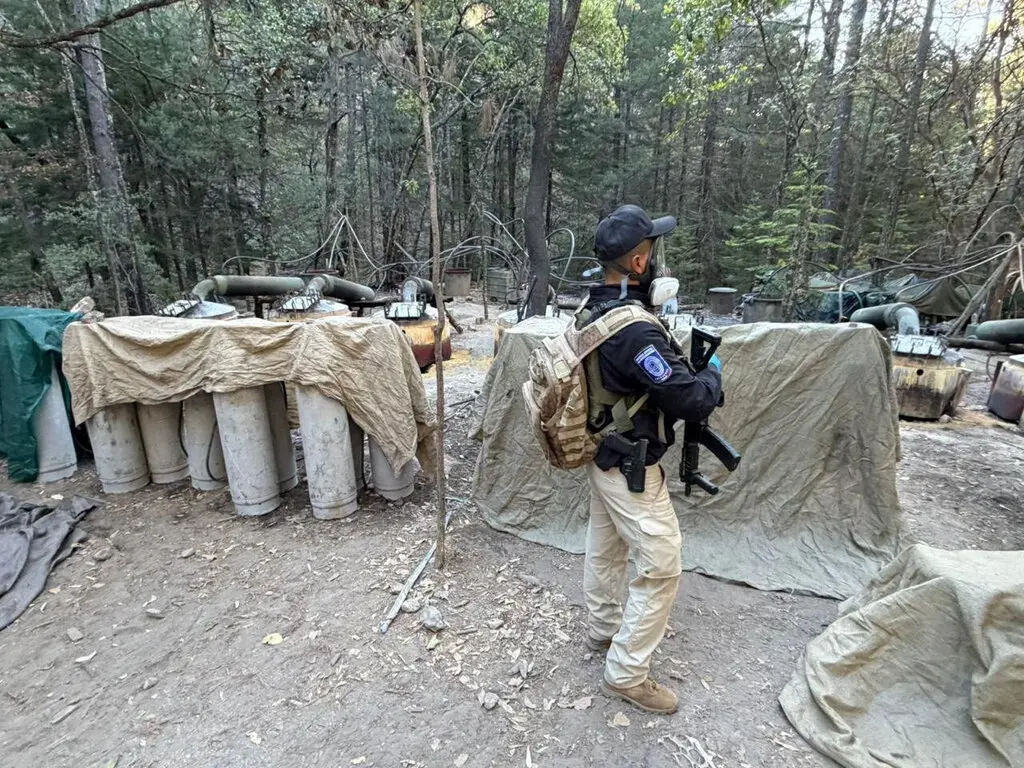
The crash that killed the two American officials occurred early Sunday in the remote mountains of Chihuahua state. Their vehicle plunged off a mountain road while they were returning from an operation led by Mexico’s armed forces to dismantle a large clandestine methamphetamine laboratory.
The accident also claimed the lives of two Mexican officials who were traveling with the Americans. The harsh terrain of the Chihuahua mountains, combined with whatever circumstances caused the vehicle to leave the road, resulted in fatalities for everyone involved.
According to The New York Times and other outlets, the two American officials were CIA officers. The agency itself has declined to comment on the matter, neither confirming nor denying the identification of its personnel.
The Authorization Problem
The most explosive development in this story is the Mexican government’s revelation that the American officials had no formal authorization to participate in counter-cartel activities. In a statement released Saturday morning, the Mexican federal security cabinet detailed the immigration status of the deceased officials.
According to immigration records cited in the statement, one of the two officials entered Mexico as a visitor “without permission to engage in paid work.” The other arrived on a diplomatic passport. Neither status would have authorized them to participate in active law enforcement or counter-narcotics operations within Mexican territory.
The Mexican statement was unequivocal. The government, the institutions comprising the security cabinet, and the Ministry of Foreign Affairs were all unaware of any foreign agents operating or planning to physically participate in operational activities within Mexican territory.
This is a significant statement coming from a Mexican government that has otherwise maintained productive working relationships with the United States on security matters. By formally documenting the lack of authorization, Mexico is establishing a clear record that what happened was outside agreed-upon protocols.
Why This Matters Legally
The legal framework governing foreign agents in Mexico is strict and clear. Mexico’s national security law explicitly forbids foreign agents — including U.S. military and law enforcement officials — from operating within the country without explicit government authorization.
This isn’t just a matter of paperwork. American officials working directly with state-level Mexican authorities without federal approval would constitute a breach of the Mexican Constitution. The country’s commitment to sovereignty in security matters is enshrined at the highest legal levels.
The Mexican federal security cabinet emphasized this principle in its statement. International cooperation on security matters, according to the statement, is carried out through specific mechanisms for information exchange, institutional coordination, and technical collaboration. These mechanisms must operate with absolute respect for national sovereignty, reciprocity, mutual trust, and without subordination.
This careful language reflects decades of Mexican political sensitivity about American involvement in Mexican affairs. Mexico has historically been cautious about foreign interventions, given its complicated history with the United States, and the current government has continued this tradition.
Conflicting Accounts
One particularly troubling aspect of the situation involves contradictions in the accounts coming from various Mexican authorities. The Chihuahua attorney general initially insisted that the American personnel were not involved in the antidrug operation itself and that it was led entirely by Mexican forces.
According to this account, the American “instructors” only went to the scene of the operation after it had unfolded, and their presence was for training purposes — including teaching the handling of drones.
However, the same office contradicted these statements through previous news releases and a spokesman. The earlier communications said that the Americans had been killed while returning “from an operation to dismantle clandestine laboratories.” Later additions characterized them as part of an authorized training program to teach Mexican counterparts how to handle dangerous synthetic drugs.
These conflicting narratives raise serious questions about what actually occurred. Were the Americans observers, trainers, or active participants? Different answers carry significantly different implications for diplomatic relations and Mexican sovereignty.
President Sheinbaum’s Position
Mexican President Claudia Sheinbaum has been navigating this difficult situation carefully, balancing her commitment to U.S.-Mexico cooperation with her insistence on Mexican sovereignty. Her statements suggest she’s taking the situation seriously while preserving room for the relationship to continue.
Sheinbaum has acknowledged that the United States is “working alongside” Mexican authorities. However, she has been clear that if the ongoing investigation confirms the CIA officers were engaged in a joint operation, her government would send a formal reprimand to the U.S. government.
The president has drawn firm lines throughout her tenure. She has championed cooperation with the United States as essential while maintaining absolute opposition to U.S. troops operating on Mexican soil — something Trump has repeatedly threatened to pursue unilaterally.
This balancing act has earned Sheinbaum praise in Washington while preserving her credibility with Mexican voters who are deeply concerned about national sovereignty. The current crisis tests whether this delicate balance can be maintained.
Communication Breakdown
On Friday, Sheinbaum revealed that Omar García Harfuch, Mexico’s top security official, had met with Chihuahua governor Maru Campos to explain the principles and laws for collaborating with foreign governments. According to Sheinbaum, in this case, the proper procedure was not followed.
This admission suggests that there may have been a breakdown in communication or coordination at the state level. The Chihuahua state authorities may have engaged with American officials in ways that exceeded what federal protocols would have allowed.
Governor Campos responded by emphasizing her administration’s commitment to strengthening collaboration with the federal government through dialogue, trust, and institutional responsibility while always defending Mexican sovereignty and integrity.
She also announced the creation of a specialized unit specifically to investigate the antidrug operation. This move reflects the importance of the case and demonstrates a desire to ensure complete transparency about what actually happened.
The CIA’s Expanded Role
The deaths come at a time when the CIA has taken on an expanded role in the war against drugs and trafficking groups in Latin America. Under President Trump’s leadership, the agency has become increasingly involved in operations that go beyond traditional intelligence gathering into more active counter-narcotics work.
This expansion has been controversial. Critics argue it represents mission creep that could draw the United States into deeper entanglements in foreign countries’ internal security matters. Supporters contend that the scale of the cartel threat justifies more aggressive American involvement.
The current incident may force a reckoning about whether the expanded role is being implemented with adequate coordination and respect for the sovereignty of partner nations. When American intelligence officials die while operating in another country without proper authorization, fundamental questions arise about how the policy is being executed.
Ambassador Johnson’s Response
U.S. Ambassador to Mexico Ronald Johnson responded to the situation with a statement emphasizing common ground between the two countries. According to Johnson, both nations face a common enemy in the criminal organizations that harm families on both sides of the border.
The ambassador stressed that families on both sides of the border want the security and safety that only working closely as partners can deliver. However, Johnson notably did not directly address the issue of the officials’ lack of authorization from Mexico.
This careful diplomatic dance — emphasizing partnership while avoiding direct discussion of the authorization problem — reflects the difficult position the U.S. embassy finds itself in. Acknowledging that American officials operated improperly would strain the relationship, but ignoring the issue entirely is also not viable.
The Broader Strategic Question
The situation raises broader strategic questions about how the United States should engage with Mexico on counter-narcotics work. Several models have been tried over the years, with varying degrees of success.
One approach involves heavy reliance on Mexican forces with American intelligence, training, and equipment support but minimal direct involvement. This model prioritizes Mexican sovereignty and avoids the political complications of foreign agents operating in Mexican territory.
Another approach features more direct American involvement, including DEA operations, special forces presence, and intelligence officer participation in operations. This model can produce more immediate results but creates significant sovereignty issues.
The Trump administration has been pushing toward the more direct involvement model, including suggestions of unilateral action against cartels. This pushes against Mexican preferences and creates the kind of authorization gaps that may have contributed to the recent tragedy.
Finding the right balance between effectiveness and respect for sovereignty has been a persistent challenge in the bilateral security relationship, and the recent deaths may force a renewed examination of these tradeoffs.
Implications for Future Cooperation
How this situation is handled will have significant implications for future U.S.-Mexico cooperation on security matters. If both governments can use this tragedy as an opportunity to strengthen coordination protocols, the relationship could emerge stronger.
If, on the other hand, the situation leads to public confrontation and erosion of trust, future cooperation will be more difficult. Mexican domestic political pressure could force Sheinbaum to take harder positions, while American political pressure could push the Trump administration toward more unilateral action.
The reality is that both countries genuinely need each other for effective counter-narcotics work. Cartels operate transnationally, and neither country can address the problem alone. This mutual dependence creates incentives for finding workable solutions, even when specific incidents create tensions.
The Role of State-Level Cooperation
One particularly tricky aspect of this situation involves the role of state-level Mexican authorities in cooperation with American agencies. The Mexican federal government has clear protocols for international cooperation, but states like Chihuahua have their own security challenges and may sometimes feel pressure to cooperate with American partners more directly than federal protocols allow.
This creates structural tensions that aren’t easily resolved. State governors may want maximum flexibility to address local security threats, while federal authorities want to maintain unified national positions on foreign relations and sovereignty.
The current case suggests these tensions may have contributed to the breakdown in protocols that led to American officials operating without proper authorization. Going forward, clearer guidelines about what state-level officials can and cannot authorize regarding foreign agents will likely be necessary.
The Family Dimension
Behind the geopolitical complexities are real human tragedies. Two American officers and two Mexican officials lost their lives. Their families and colleagues are grieving, and the political dimensions of the case must not overshadow the human cost.
For the families of the deceased CIA officers, the situation must be especially difficult. The classified nature of their work means that public information about their lives and the circumstances of their deaths is necessarily limited. The families face their grief while their loved ones’ deaths become entangled in international diplomacy.
This human dimension is worth remembering as the political and legal aspects of the case unfold. Behind every news story about international relations are real people whose lives have been changed forever.
Looking at the Methamphetamine Lab Operation
The actual operation that prompted the American presence in Chihuahua targeted what authorities described as a large clandestine methamphetamine lab. Mexican meth production has become a major part of the global drug trade in recent years, with Mexican cartels dominating the supply chain that feeds American addiction.
Successful operations against meth labs are important for both countries’ interests. The drugs produced in these facilities ultimately end up in American communities, creating addiction crises and contributing to overdose deaths. Disrupting production at the source has clear benefits for U.S. public health.
This is why Americans want to be involved in operations against these facilities. The challenge is finding ways to provide assistance that don’t violate Mexican sovereignty or create the kind of unauthorized presence that may have contributed to the recent deaths.
What Mexican Public Opinion Will Say
Mexican public opinion on the situation will likely be deeply influenced by the sovereignty implications. Mexicans have historically been sensitive to perceived American interference in their affairs, and stories about CIA officers operating without permission feed directly into long-standing concerns.
The Sheinbaum government will need to demonstrate that it is protecting Mexican sovereignty while maintaining productive relationships with the United States. This balancing act is genuinely difficult, especially when American officials and elected leaders make statements that could be interpreted as undermining Mexican autonomy.
Public opinion will also be influenced by how the investigation unfolds and what information becomes public. Transparency could help maintain trust, while perceived cover-ups could create lasting damage to both governments.
Final Thoughts
The CIA officers Mexico crash unauthorized situation represents a significant moment in the U.S.-Mexico security relationship. The deaths of four people — two Americans and two Mexicans — combined with the revelation that the American officials lacked proper authorization, has created a diplomatic crisis that both governments are working to manage.
How this situation resolves will say a lot about the maturity and resilience of the bilateral security relationship. Strong relationships can absorb difficult incidents and emerge stronger. Weaker relationships can be damaged by such incidents in ways that take years to repair.
For the United States, the lesson should be about the importance of operating within proper authorization frameworks even when intentions are good. American interests in fighting drug trafficking are legitimate, but pursuing those interests without proper coordination undermines the very relationships needed for long-term success.
For Mexico, the situation reinforces the importance of clear protocols and consistent application of sovereignty principles. The federal government will need to ensure that state-level officials understand the limits of what they can authorize and that all American operations comply with established procedures.
Most importantly, both countries need to remember that they share fundamental interests in fighting the cartels that harm citizens on both sides of the border. As Ambassador Johnson noted, the criminal organizations are the common foe. Working together effectively requires respecting each other’s sovereignty while finding ways to coordinate on shared challenges.
The road forward will require difficult conversations, new protocols, and probably some uncomfortable acknowledgments on both sides. But the alternative — letting the cartels exploit divisions between the two countries — is unacceptable. The deaths of these four officials, however tragic, may ultimately serve as an important catalyst for stronger cooperation if both governments approach the situation with wisdom and good faith.
For now, families are grieving, investigations are unfolding, and diplomats are working to manage the immediate fallout. What emerges from this difficult moment will shape the U.S.-Mexico security relationship for years to come.