


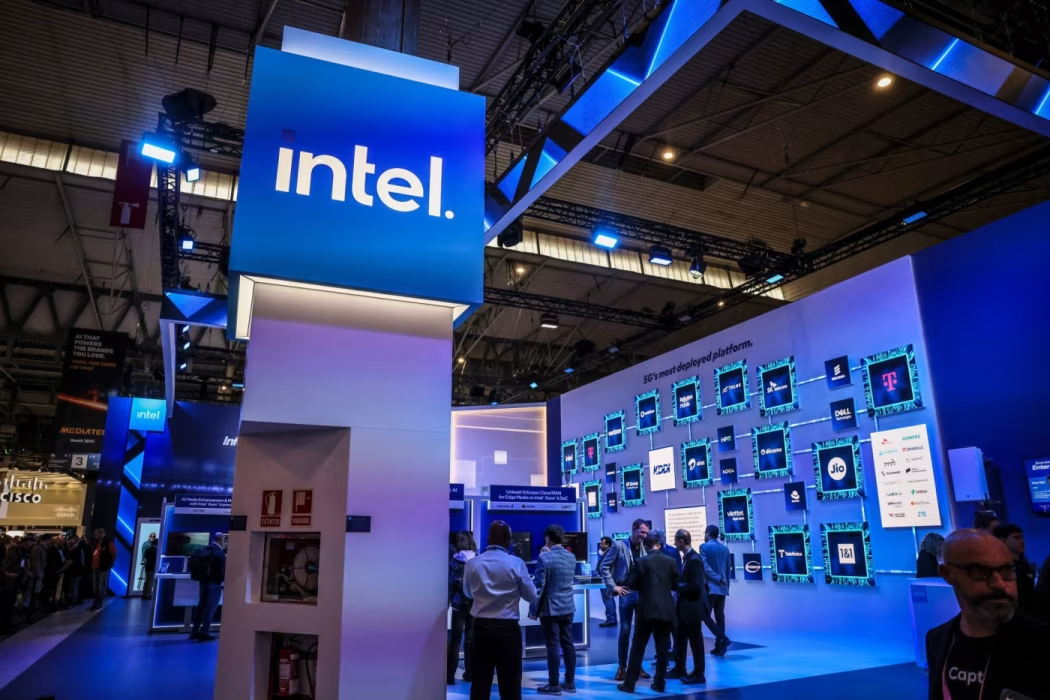
Intel Stock Rockets Overnight on Blowout Q1 Earnings: Why Analysts Say the Rally Has Room to Run
Intel stock rockets overnight, catching Wall Street off guard and reigniting investor excitement across the entire semiconductor sector. Following a stunning first-quarter earnings report released Thursday, INTC shares soared more than 22% in after-hours trading, pulling peers like Advanced Micro Devices and Arm Holdings along for the ride.
For a company that was practically being written off just a year ago, the turnaround feels almost unbelievable. And yet, here we are: Intel is leading a chip rally, data center demand is roaring back, and analysts are openly wondering if they’ve been underestimating the old giant all along.
A Blockbuster Quarter That Changed the Conversation
Intel’s first-quarter numbers didn’t just beat expectations, they obliterated them. Revenue climbed 7% to $13.6 billion, while adjusted earnings per share more than doubled to $0.29. Even more impressive, the company’s second-quarter guidance came in well above what Wall Street had been anticipating, with projected sales of $13.8 to $14.8 billion and EPS of $0.20, double the analyst consensus.
For a chipmaker that spent much of the past few years struggling to keep pace with rivals, those numbers represent more than just a good quarter. They signal something much bigger happening across the industry.
Why Data Center Demand Is Fueling the Surge
One of the most telling parts of Intel’s report was the sheer volume of CPUs being snapped up by data center builders. As artificial intelligence workloads continue to expand, companies are scrambling to build out their infrastructure, and that means buying everything, not just the flashy GPUs that usually grab headlines.
CEO Lip-Bu Tan summed it up nicely in the earnings release, explaining that the next wave of AI is pushing intelligence closer to end users, shifting from foundational models toward inference and agentic AI. That evolution is creating massive new demand for Intel’s CPUs, wafers, and advanced packaging services.
In simple terms, AI isn’t just about GPUs anymore. Every data center still needs powerful CPUs to handle general computing tasks, and Intel remains a dominant player in that space.
CPUs vs GPUs: Understanding the Distinction
To appreciate why Intel’s results matter so much, it helps to understand the basic difference between the two main types of chips:
- CPUs (Central Processing Units) handle a wide variety of computing tasks using a small number of powerful cores. They’re the brains behind personal computers and most consumer devices.
- GPUs (Graphics Processing Units) specialize in running thousands of smaller cores in parallel, making them ideal for AI training, graphics rendering, and massive data crunching.
While Nvidia has dominated the GPU conversation, Intel’s latest numbers show that the demand for CPUs is far from fading. In fact, the AI buildout is actually driving CPU sales higher than many analysts expected.
The Foundry Business Finally Delivers
For years, Intel’s foundry business, which makes chips for other companies, has been a sore spot. Critics questioned whether Intel could ever compete with Taiwan’s TSMC or Samsung in contract manufacturing.
This quarter, things looked different. Foundry sales jumped 16%, the strongest performance on record since Intel began reporting the segment separately. That’s a huge deal because it suggests Intel’s massive investments in new fabs and advanced packaging technology are finally starting to pay off.
Daniel Newman, founder of The Futurum Group, captured the optimism perfectly when he pointed out that Intel is already hitting new highs before the foundry business is even meaningfully contributing. If the foundry segment really takes off in the coming quarters, there could be significantly more upside ahead.
Is Intel Stock Actually a Buy Right Now?
Here’s where things get interesting. Even before the blowout report, Intel stock was already up more than 80% in 2026, pushing its forward price-to-earnings ratio above 118 times, far higher than the sector’s average of around 24 times.
That kind of valuation naturally raises eyebrows. Are investors paying too much? Is the rally overdone?
Gene Munster, managing partner at Deepwater Asset Management, doesn’t think so. In his words, “We’re overthinking this.” He pointed out that while the P/E multiple looks stretched, Intel’s revenue multiple actually trades at about half of where TSMC and Nvidia are currently valued. So there’s still a reasonable case to be made on valuation grounds.
Munster also emphasized that Intel was “on the ropes” just last year, making this recovery all the more remarkable. According to him, the report confirms that AI-related chip demand is robust and likely to keep powering the entire sector.
A Rising Tide for the Whole Chip Sector
One of the clearest signals from Thursday’s after-hours action was how Intel’s rally lifted its rivals as well. AMD shares climbed about 7%, while ARM Holdings jumped roughly 5%, all in overnight trading.
As CNBC’s Jim Cramer put it, Intel can still be bought, but AMD and ARM look equally attractive right now, with ARM potentially being the best horse to ride in the near term.
Munster echoed this rising-tide sentiment, arguing that the semiconductor industry is still in the early innings of the AI revolution. The idea that chips are a major bottleneck for AI development, something Elon Musk has been vocal about, seems to be playing out exactly as predicted.
Advanced Packaging: The Hidden Catalyst
One piece of the puzzle that often gets overlooked is advanced packaging. This is essentially the process of combining multiple chips into a single, high-performance package, and it’s becoming one of the biggest bottlenecks in AI hardware production.
Intel happens to be investing heavily in this area, which could turn out to be a major competitive advantage over the next five years. As AI models grow larger and more complex, the ability to efficiently package and connect chips will only become more valuable.
Retail Investors Pile In
The enthusiasm wasn’t limited to Wall Street. Intel became the top trending ticker on Stocktwits during Thursday’s late hours, with retail sentiment shifting from “bullish” to “extremely bullish” almost overnight. Message volume on the platform surged nearly 400% within 24 hours.
This kind of retail excitement can sometimes signal a short-term top, but it can also reflect genuine enthusiasm about a company’s long-term prospects. Given the fundamental improvements Intel is showing, the latter seems more likely in this case.
What to Watch Going Forward
While the overnight rally has been impressive, investors should keep an eye on several key factors in the coming weeks and months:
- Whether Intel can sustain its CPU momentum as competition from AMD intensifies
- How quickly the foundry business can scale up and attract major customers
- Progress on advanced packaging technologies and capacity expansion
- Overall demand trends in the data center market
- Any updates on Intel’s relationship with key AI chip buyers
Each of these factors will play a role in determining whether the current rally extends further or cools off.
The Bigger Picture: AI Is Still in Early Innings
Perhaps the most important takeaway from Intel’s report isn’t about Intel at all. It’s about what the numbers reveal regarding the broader AI boom.
If a company that was struggling just a year ago can post this kind of turnaround, it suggests that demand across the chip ecosystem is stronger and broader than many realized. This isn’t just a Nvidia story anymore. It’s a story about CPUs, GPUs, memory, foundry services, and advanced packaging all benefiting from the same underlying trend.
For investors, that means the opportunity in semiconductors extends well beyond the handful of names that have dominated headlines over the past two years.
Final Thoughts
Intel stock rockets overnight, and for once, the old chip giant is the one setting the pace rather than chasing it. With strong earnings, improving foundry performance, and a clear runway from the AI buildout, Intel has given investors plenty of reasons to be optimistic.
Whether the rally continues depends on execution, competition, and the sustainability of AI-driven demand. But one thing is clear: the semiconductor story is far from over, and Intel just reminded everyone that it’s still very much part of it.
As Munster put it, we are still very early in AI, and the rising tide may just be starting to lift all the chip boats.