


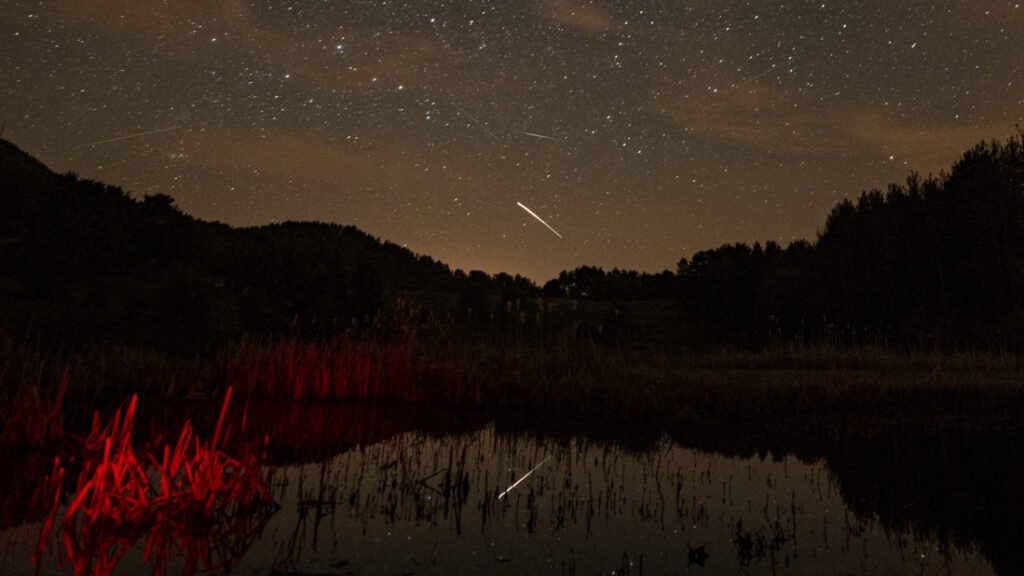
Tonight’s the night sky watchers have been waiting for. The Lyrid meteor shower reaches its peak tonight, April 21, 2026, offering one of the most reliable and accessible meteor displays of the spring season. While it may not be the flashiest shower of the year, the Lyrids have a unique advantage that makes them especially worth staying up for.
What Makes the Lyrid Meteor Shower Special
The Lyrid meteor shower happens every year as Earth travels through a trail of dust and rocky debris left behind by Comet C/1861 G1, better known as Comet Thatcher. This ancient comet takes roughly 415 years to complete a single loop around the Sun, and each time Earth crosses its debris path, we get a cosmic light show.
The particles responsible for these dazzling streaks are tiny, most no bigger than grains of sand. But size isn’t everything. These specks slam into our atmosphere at a blazing 30 miles per second. The intense friction causes them to heat up rapidly and burn, creating the brief, brilliant flashes of light we recognize as meteors.
How Many Lyrid Meteors Can You Expect to See?
Let’s keep expectations realistic. The Lyrid meteor shower is considered a medium-strength shower, not one of the year’s blockbusters. Under dark skies, you can reasonably expect to see about 10 meteors per hour during peak viewing.
Some years, the Lyrids have surprised observers with sudden bursts of activity, occasionally producing dozens of meteors in short periods. These outbursts are exciting when they happen, but they’re also extremely rare and nearly impossible to predict in advance. So while there’s always a chance for something spectacular, it’s wise to plan for the standard display.
What the Lyrids lack in quantity, they make up for in positioning. Unlike some showers that hug the horizon and make viewing awkward, the Lyrids rise high into the sky for observers across the United States. That elevated position gives you access to a much broader slice of the meteor show.
Best Time to Watch the Lyrid Meteor Shower Tonight
Timing is everything when it comes to meteor viewing. Here’s your game plan for tonight:
- Start watching around 10 p.m. local time, when the constellation Lyra rises high enough in the east
- Meteor activity should increase steadily as the night progresses
- Rates typically improve significantly after midnight once the Moon sets
- The absolute best viewing window is one to two hours before sunrise, when Earth is turning directly into the debris stream and Lyra is nearly overhead
If you can only stay up for part of the night, the pre-dawn hours offer the strongest show. But even evening viewing can produce memorable sightings if you’re patient.
Where to Look in the Sky
The shower gets its name from the constellation Lyra, where the meteors appear to originate. Finding Lyra is easier than you might think. Its brightest star, Vega, is one of the most prominent stars in the night sky and serves as a perfect landmark.
To locate Lyra:
- Look toward the eastern sky after 10 p.m.
- Find Vega, a bright blue-white star that’s hard to miss
- Lyra sits between the constellation Hercules, recognizable by its distinctive “keystone” pattern of four stars, and Cygnus, which many stargazers know as the Northern Cross
One important tip: while meteors appear to radiate from Lyra, they can streak across any part of the sky. So don’t stare only at the constellation. Keep your gaze wide and scan the darkest areas above you.
Essential Tips for the Best Meteor Viewing Experience
Getting the most out of meteor watching isn’t just about looking up. A few simple strategies can dramatically improve what you see.
Give Your Eyes Time to Adjust
Dark adaptation is crucial. Plan to spend at least 15 minutes in darkness before you start expecting to see meteors. Your eyes will gradually become much more sensitive to faint lights, revealing meteors you’d otherwise miss entirely.
Put Your Phone Away
This one is tough for most of us, but it matters. A single glance at a bright phone screen can reset your night vision, forcing you to start that 15-minute adjustment period all over again. If you absolutely need your phone, use a red-light mode or cover the screen with red cellophane.
Find the Darkest Spot Available
Light pollution is the biggest enemy of meteor watching. A backyard in the suburbs will work, but getting away from streetlights and city glow makes a huge difference. If you can drive to a rural area or a designated dark sky location, you’ll be rewarded with far more visible meteors.
Be Patient
Meteors rarely arrive on a consistent schedule. You might see three in five minutes, then nothing for twenty. That’s normal. Patience is genuinely part of the experience, and the sudden appearance of a bright meteor after a long quiet stretch is always a thrill.
Dress Warmly
April nights can be deceptively cold. Temperatures tonight are expected to dip into the low 50s around midnight, and you’ll feel much colder after sitting still for an hour or two. Layers, blankets, and a hot drink will transform the experience from uncomfortable to enjoyable.
A Bonus Sight: Jupiter and the Moon
While you’re outside waiting for meteors, don’t forget to look west before midnight. Bright Jupiter will be shining beautifully above the Moon, adding an extra dose of celestial beauty to your evening. It’s the kind of bonus that makes heading outside feel even more worthwhile.
Can You See the Lyrids After the Peak?
Yes, the Lyrid meteor shower doesn’t simply vanish after tonight. While Tuesday is the peak, meteor activity continues for several days on either side. If cloudy weather or a busy schedule keeps you inside tonight, you’ll still have chances to catch some stragglers over the next few evenings, though numbers will gradually decline.
Why the Lyrids Hold a Special Place in Astronomical History
The Lyrid meteor shower is actually one of the oldest recorded meteor showers in human history. Chinese astronomers documented observations of it more than 2,600 years ago, describing meteors falling like rain. That long historical record gives the Lyrids a kind of ancient charm that few other celestial events can match.
Every year when Earth passes through Comet Thatcher’s debris trail, we’re essentially connecting with a cosmic phenomenon that humans have been watching and wondering about for millennia. There’s something humbling about that continuity.
Setting Up for a Great Night Under the Stars
If you want to make tonight truly memorable, consider turning it into a mini event:
- Pack a thermos of coffee, hot chocolate, or tea
- Bring a reclining lawn chair or a thick blanket to lie on
- Invite family or friends, though keep conversation quiet to preserve the calm atmosphere
- Bring binoculars for exploring other parts of the night sky between meteor sightings
- Download a star-finding app before you head out, but activate its red-light mode
Meteor showers are one of those rare experiences that cost nothing, require no special equipment, and connect us directly to the broader universe. Whether you see ten meteors or twenty, the simple act of lying back and watching the sky can be surprisingly restorative.
Final Thoughts on Tonight’s Lyrid Meteor Shower
The Lyrid meteor shower may not shatter records, but it offers something even better. It’s reliable, beautifully positioned in the sky, and accessible to almost anyone willing to step outside and look up. Tonight’s peak is your best shot, so grab a blanket, find a dark spot, and let the cosmos put on its show.
Clear skies, warm layers, and a patient attitude are really all you need. The universe will take care of the rest.