


NATO Clarifies No Rules Exist to Expel Members as US Reportedly Weighs Action Against Spain
In a moment of unexpected political tension within the Western military alliance, NATO has publicly confirmed that there is no legal provision to suspend or expel member states. The clarification came shortly after reports surfaced suggesting that the United States was exploring measures to potentially punish Spain over its refusal to support certain U.S. actions in the Iran conflict. The situation has sparked concern among allies, raised constitutional questions about NATO’s structure, and opened up a wider debate about unity and cooperation within the alliance.
What Sparked the Controversy
The current back-and-forth began when Reuters reported on the contents of an internal Pentagon email. According to an anonymous U.S. official, the memo floated ideas on how the U.S. could respond to allies it felt had not sufficiently backed its campaign against Iran. Among the most eye-catching proposals were suggestions that Spain could be suspended from NATO and that the U.S. might reconsider its stance on the UK’s claim to the Falkland Islands, which are also claimed by Argentina.
When pressed about the possibility of expelling members, a NATO official told the BBC in no uncertain terms that the alliance’s founding treaty does not include any mechanism for suspending or removing a member state. The treaty was built around mutual defense and cooperation, not exclusion.
Spain Dismisses the Report
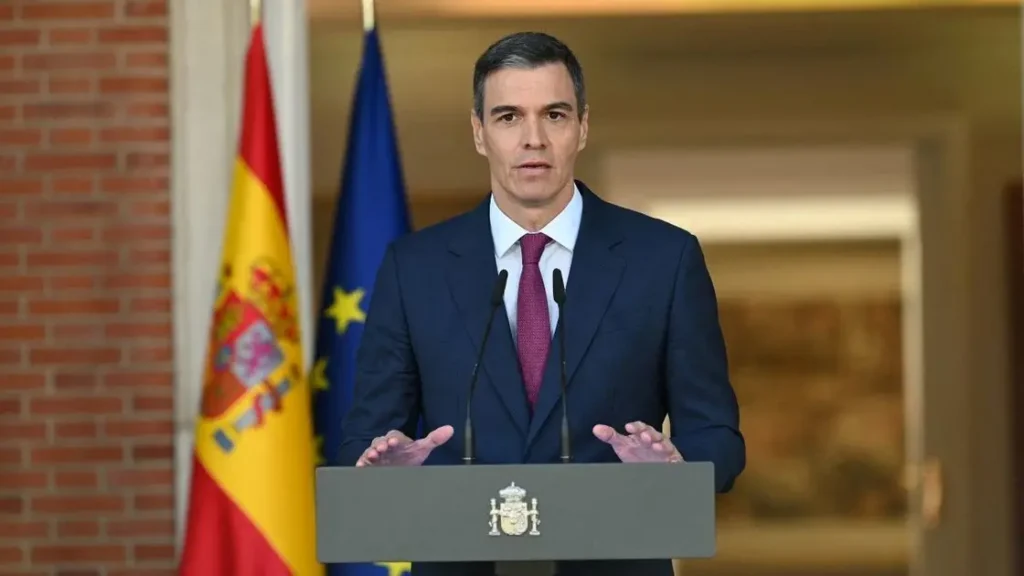
Spanish Prime Minister Pedro Sánchez quickly responded to the news, brushing off the concerns raised in the leaked email. He made it clear that Spain operates based on official documentation and established positions, not internal memos that may not represent the government’s actual stance.
Sánchez emphasized that Spain is fully committed to cooperating with its allies but insists that such cooperation must take place within the framework of international law. That statement reflects Spain’s long-standing position of refusing to allow the use of air bases on its territory for attacks on Iran, even though the U.S. operates two major military bases in the country: Naval Station Rota and Morón Air Base.
The UK and the Falklands Question
The Pentagon memo reportedly went beyond just targeting Spain. It also proposed reviewing the U.S. position on the UK’s claim to the Falkland Islands, a British overseas territory that has been the subject of a long-standing dispute with Argentina. The islands are located about 8,000 miles from the UK and 300 miles from mainland Argentina, and the two countries fought a war over the territory in 1982 after Argentine forces invaded.
For the UK, any shift in American support for its sovereignty claim over the Falklands would be a significant diplomatic issue. Historically, the U.S. has acknowledged the UK’s administration of the islands while officially taking a neutral stance on sovereignty. Any reassessment could have real implications for the UK’s broader foreign policy and its relationship with Washington.
Trump’s Frustrations With NATO
President Donald Trump has long voiced frustrations with the NATO alliance, repeatedly criticizing members for not pulling their weight. His comments in recent months have continued to echo that sentiment, particularly after the U.S. and Israel launched strikes against Iran on February 28 and Iran subsequently began restricting shipping through the strategically critical Strait of Hormuz.
Trump has gone so far as to describe NATO as a “one-way street,” arguing that the U.S. protects its allies without getting much in return. His administration’s push to get allies more involved in operations against Iran is a continuation of that viewpoint.
Defense Secretary Fires a Fresh Shot
U.S. Defense Secretary Pete Hegseth didn’t hold back either. In a recent news conference, he took direct aim at European allies, saying that the U.S. was not counting on Europe for support but that European nations depended on the Strait of Hormuz far more than America does. Hegseth suggested that Europe should spend less time in conferences and more time actively contributing to the effort.
His comment that “the time for free riding is over” captured the current mood within the Trump administration, which has increasingly pressed for allied nations to take on more responsibility in military and strategic operations.
What Was Actually in the Memo
According to the unnamed U.S. official cited by Reuters, the internal Pentagon email considered several options for pressuring allies seen as uncooperative. These reportedly included:
- Suspending Spain from NATO activities as a punitive measure
- Reassessing U.S. diplomatic support for European overseas territories, such as the Falkland Islands
- Suspending “difficult” countries from key leadership positions within NATO
- Reviewing broader access, basing, and overflight rights agreements
Importantly, the memo did not suggest that the U.S. would withdraw from NATO altogether, nor did it propose closing American bases in Europe. However, even the mention of such measures has raised eyebrows across the alliance.
Reactions Across NATO
The leak has prompted quick responses from European leaders. Italian Prime Minister Giorgia Meloni urged NATO members to remain united, calling the alliance a source of strength. Speaking at an EU summit in Cyprus, she emphasized the importance of reinforcing NATO’s European pillar alongside the American one.
A German government spokesperson also pushed back on any notion that Spain’s membership was in question. During a regular news conference in Berlin, the spokesperson stated plainly that Spain is a NATO member and that there is no reason for that to change.
These reactions highlight how sensitive allies are about the idea of internal friction and the potential for the U.S. to punish individual members.
The UK’s Delicate Balancing Act
UK Prime Minister Keir Starmer has walked a careful line during the current conflict. He has insisted that further involvement in the war with Iran, or in the ongoing U.S. blockade of Iranian ports, is not in the UK’s best interest. At the same time, the UK has allowed the U.S. to use British bases for strikes on Iranian sites connected to the Strait of Hormuz and has participated in missions to shoot down Iranian drones with RAF planes.
The UK, along with France and others, has signaled that it would be willing to help keep the Strait of Hormuz open after the war ends or a lasting ceasefire is reached. However, they have so far stopped short of committing to direct involvement in ongoing offensive operations.
Why the Strait of Hormuz Matters
It’s worth taking a moment to understand why the Strait of Hormuz is such a central part of this story. Located between Iran and the Arabian Peninsula, the strait is one of the most strategically important shipping lanes in the world. Roughly a third of the world’s seaborne oil passes through it, making any disruption potentially catastrophic for global markets.
Iran’s ability to restrict shipping through the strait has historically been one of its most powerful leverage points. Any prolonged conflict that closes or threatens the strait could send oil prices soaring and disrupt economies worldwide.
What This Means for the Alliance
The revelation of the Pentagon memo, combined with repeated criticisms from U.S. leadership, has put NATO in a delicate position. Here are some of the key implications:
- Allies are being forced to clarify their commitments and stances more publicly
- Internal divisions could weaken the alliance’s negotiating power globally
- Discussions about burden-sharing are becoming more intense
- The perception of U.S. reliability as a partner is under scrutiny
- Long-standing diplomatic relationships, including those tied to historical territories, could be affected
Despite the tension, alliance officials continue to stress that cooperation and unity remain the foundation of NATO’s purpose.
Pentagon’s Official Response
In response to the Reuters report, Pentagon Press Secretary Kingsley Wilson offered a statement that reinforced the administration’s frustrations with allies. She emphasized that, despite all the U.S. has done for NATO allies, they “were not there for us.” She also noted that the Department of Defense would continue working to ensure the president has credible options to encourage allied nations to contribute more substantively.
Wilson declined to provide further comments on internal deliberations, which means the specific proposals floated in the leaked memo remain officially unconfirmed.
A Complicated Future for NATO
This incident, while specific to the current situation with Iran, reflects a broader question about where NATO goes from here. With shifting geopolitical priorities, new global threats, and ongoing debates about financial and military contributions, the alliance is being pushed to evolve. Some of the key dynamics shaping the conversation include:
- A U.S. administration focused on transactional foreign policy
- Rising regional tensions beyond traditional European security concerns
- Economic pressure on member states, making increased military spending difficult
- Evolving threats involving cyber warfare, AI, and non-traditional actors
- A need for Europe to take on more independent defense capabilities
Whether this leads to long-term reform of NATO or simply another round of political friction remains to be seen.
Final Thoughts
The claim that NATO could expel Spain, or even consider punishing member states through diplomatic or structural mechanisms, has triggered an important conversation. Officially, NATO has no provision to remove members, and allied nations have been quick to push back against the idea.
Still, the mere existence of the leaked Pentagon memo highlights a growing tension within the alliance, especially regarding how far individual nations are willing to go in supporting U.S. military actions. For Spain, the UK, and other allies, this is a delicate moment that requires careful diplomacy. For the alliance as a whole, it’s a reminder that unity, while foundational, is not automatic.
As the situation develops, the real story may not be whether any country gets suspended from NATO. It may be whether the trust and coordination that have held the alliance together for decades can adapt to the new challenges of the 21st century.