


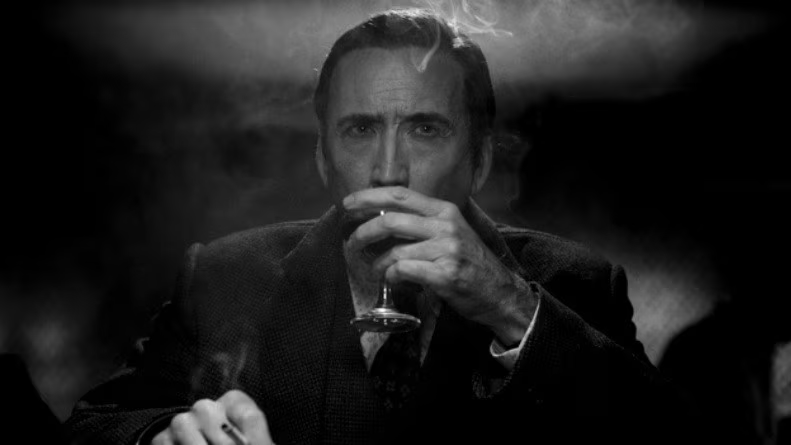
Nicolas Cage Spider-Noir Trailer: The Oscar Winner Finally Makes His TV Debut as a 1930s Marvel Detective
The Nicolas Cage Spider-Noir trailer has officially landed, marking a genuinely significant moment in entertainment as one of cinema’s most distinctive performers makes his first ever foray into scripted television. Prime Video unveiled the highly anticipated footage from “Spider-Noir,” a live-action series based on Marvel’s beloved Spider-Man Noir comics that promises to deliver something refreshingly different from the typical superhero formula.
A Premiere Worthy of the Material
The trailer made its world premiere in Mexico City at CCXPMX26, the largest pop culture festival anywhere in the world. The setting felt appropriate for unveiling such a major project, drawing the kind of dedicated comics and entertainment fans most likely to appreciate the series’ unique creative direction.
Cast members Lamorne Morris, Li Jun Li, Jack Huston, and Karen Rodriguez took the stage personally to introduce the series to enthusiastic audiences. Nicolas Cage himself participated virtually, fitting given the contemporary realities of cross-continental promotional appearances while still maintaining genuine connection with the announcement event.
Breaking the Modern Superhero Mold
What sets “Spider-Noir” apart from virtually every other current superhero adaptation is its complete departure from contemporary settings and storytelling approaches. Rather than placing characters in modern-day urban landscapes filled with cell phones and social media, the series operates as a genuine period piece set in 1930s New York City.
That historical context isn’t just window dressing. The Great Depression-era setting fundamentally shapes everything from costume design and set decoration to the visual aesthetic and storytelling rhythms. Audiences should expect noir conventions including shadowy cinematography, hard-boiled dialogue, and morally complex characters operating in genuinely dark moral landscapes.
The Story at the Heart of It All
The series follows Ben Reilly, played by Cage, who works as a seasoned private investigator dealing with the kind of cynical worldview that decades of investigation work tends to produce. Down on his luck and struggling with various personal challenges, Reilly finds himself forced to confront his past life as the city’s one and only superhero following a deeply personal tragedy.
This setup gives the show enormous narrative flexibility. Audiences can simultaneously enjoy detective story conventions, explore the psychological depths of a former hero coming to grips with his identity, and witness the unique blend of mystery and superhuman action that defines the noir corner of Marvel’s expansive multiverse.
Cage’s Distinctive Approach
In a recent interview with Esquire, Cage offered fascinating insight into how he approached the role. He described his characterization as approximately 70% Humphrey Bogart and 30% Bugs Bunny, an unusual combination that perfectly captures Cage’s typically idiosyncratic approach to performance.
He elaborated on this blend by saying he was essentially channeling Mel Blanc doing Bogart, complete with sarcastic sense of humor woven throughout the performance. Despite that specific reference framework, Cage emphasized that the final result remains 100% him, his unique acting sensibilities filtered through these classic influences rather than simple impersonation.
Why TV Makes Sense for Cage Now
For Cage, taking on a quirky, dark Marvel comic role represents the ideal entry point into television after building decades of success in feature films. The actor explained his thinking with genuine enthusiasm about both the medium and the source material.
He pointed out that comic books are inherently episodic by nature, requiring readers to engage with stories that unfold across multiple installments. As a child, Cage remembered reading enthusiastically but impatiently while waiting for the next issue of whatever character had captured his imagination. That immersive experience taught him appreciation for serialized storytelling that television uniquely allows in ways feature films cannot match.
The Star Performer’s TV Track Record
Despite his enormous filmography, Cage genuinely had never starred in a television series before “Spider-Noir.” His career trajectory has consistently focused on theatrical releases, ranging from prestige projects to genre films to the occasional cult classic. Making his TV debut at this particular moment, with this particular project, suggests careful selection rather than necessity-driven adaptation to industry changes.
The decision likely reflects how television has evolved into a medium that attracts top tier creative talent across the entertainment industry. Streaming platforms commission projects with feature film production values while offering creative freedoms that traditional movie studios sometimes hesitate to provide.
What Spider-Man Noir Brings to the Table
For viewers unfamiliar with the source material, Spider-Man Noir originated as one of Marvel’s many alternative universe interpretations of Peter Parker’s iconic story. The character first appeared in the 2009 limited series of the same name and later gained mainstream attention through the animated film “Spider-Man: Into the Spider-Verse.”
The noir version transforms familiar elements through Depression-era sensibilities:
- Web-shooters take on more retro-futuristic aesthetic styling
- Costume design draws from period appropriate detective fiction
- Villains carry political weight reflecting genuine 1930s social tensions
- Power dynamics reflect economic realities of the era
- Moral ambiguity replaces clear-cut hero versus villain dynamics
These changes create genuinely fresh storytelling opportunities even for audiences thoroughly familiar with conventional Spider-Man narratives.
The Supporting Cast
The trailer showcased the talented ensemble Cage will work alongside throughout the series. Lamorne Morris, Li Jun Li, Jack Huston, and Karen Rodriguez each bring substantial credits to their respective roles, suggesting the production values extend well beyond just the lead actor’s name recognition.
Each performer faces the unique challenge of inhabiting period-appropriate characters while maintaining the heightened reality that superhero storytelling requires. Striking that balance demands genuine acting craft, and the casting decisions suggest producers prioritized capability over simple star power.
Marvel’s Expanding Multiverse Strategy
“Spider-Noir” represents another piece in Marvel’s increasingly diverse content strategy. While the main Marvel Cinematic Universe continues delivering blockbuster theatrical releases, alternative interpretations and adjacent properties allow exploration of corners of the comics legacy that wouldn’t fit the central franchise’s established tonal range.
This approach gives different audiences different entry points to Marvel storytelling. Mainstream fans get expected superhero spectacle, while genre enthusiasts get more specialized content tailored to specific tastes and interests. “Spider-Noir” clearly targets viewers who appreciate detective fiction, period drama, and morally complex storytelling alongside their superhero entertainment.
The Visual Aesthetic
Based on the trailer footage, the production has invested significantly in achieving authentic period atmosphere. Costume design appears meticulous, set construction creates believable 1930s environments, and cinematography embraces the high contrast lighting and dramatic shadows that define classic film noir.
These visual choices create immediate distinction from other current superhero properties. Audiences scrolling through Prime Video offerings will instantly recognize “Spider-Noir” as different from typical comic book content, which both helps marketing efforts and signals the genuine creative ambition driving the project.
What Audiences Should Expect
For viewers preparing to watch when the series premieres, several elements seem clear from promotional materials:
- Slower pacing than typical action-oriented superhero content
- Stronger emphasis on character psychology and moral complexity
- Period appropriate dialogue and storytelling conventions
- Mystery elements driving plots alongside superhero action
- Visual style emphasizing atmosphere over flash
This combination targets a specific viewer demographic that may not always overlap with mass-market Marvel fans, though the Cage star power should attract curious audiences who might not normally seek out genre crossovers.
The Streaming Television Moment
“Spider-Noir’s” arrival reflects how dramatically television production has evolved. The combination of an Academy Award winning lead, period production values, and Marvel intellectual property would have been virtually impossible for traditional broadcast television just two decades ago. Streaming platforms have created economic and creative environments where such projects become both feasible and commercially logical.
This evolution benefits audiences enormously. The kind of distinctive, ambitious genre content that “Spider-Noir” represents simply wouldn’t exist without the streaming model that supports projects targeting specific audience interests rather than broadest possible appeal.
Looking Forward to Premiere
Specific premiere dates and episode counts will likely be revealed as Prime Video gets closer to actually launching the series. The trailer release suggests we’re getting closer to debut, though the timing of comprehensive marketing campaigns typically begins several months before episodes actually arrive on streaming services.
Fans of Cage, Marvel, noir fiction, or simply distinctive television should mark “Spider-Noir” as a project worth watching for. The combination of elements suggests genuine creative ambition that could deliver something genuinely memorable rather than just another franchise extension.
Final Thoughts on Nicolas Cage Spider-Noir
The Nicolas Cage Spider-Noir trailer has effectively introduced what could become one of the most interesting superhero adaptations in recent memory. By stepping outside conventional contemporary settings and embracing genuine genre fusion between detective fiction and superhero storytelling, the series stakes out distinctive creative territory that should reward audience attention.
For Cage personally, the project represents thoughtful engagement with television as an artistic medium rather than mere career adaptation. His enthusiasm about episodic storytelling and willingness to bring his unique performance sensibilities to a major Marvel property suggests genuine creative investment beyond simple paycheck consideration.
When “Spider-Noir” eventually premieres on Prime Video, audiences will discover whether the assembled creative talents successfully execute the ambitious vision the trailer promises. Based on what’s been revealed so far, there’s substantial reason to anticipate something genuinely worth watching, which in our current entertainment landscape of endless content options represents meaningful achievement worth celebrating.