


Oracle Michigan Data Center: $16 Billion Project Lands in Saline Township Despite Local Opposition
The Oracle Michigan data center has officially secured the massive funding needed to become reality, marking a watershed moment in America’s accelerating artificial intelligence infrastructure buildout. With $16 billion now locked in place, the rural community of Saline Township is about to host one of the largest data centers in the United States, complete with all the economic promise and environmental concerns that come with such megaprojects.
A Truly Massive Facility
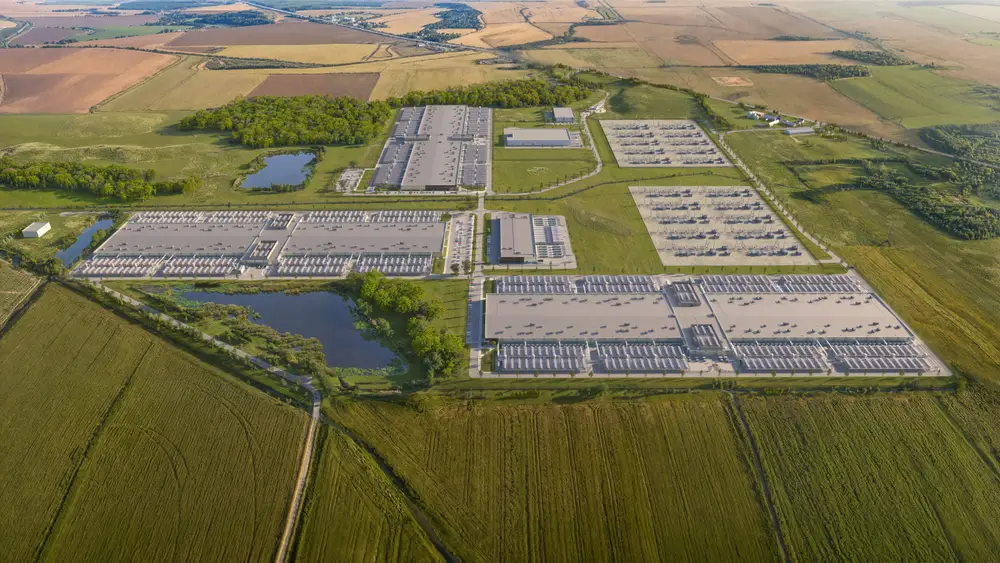
The numbers behind this project are staggering by industry standards. The Saline Township campus, located approximately 50 miles outside Detroit, will boast a capacity exceeding one gigawatt of power. To put that in perspective, most data centers operating today function with capacities ranging from 100 to 300 megawatts, meaning this facility will be roughly three to ten times larger than typical installations.
Related Digital, the developer driving the project, confirmed it has assembled the full $16 billion required for construction with significant backing from financial heavyweights Blackstone and PIMCO. That kind of institutional support signals serious confidence in both the project’s execution and the broader AI infrastructure boom fueling demand for such massive facilities.
Initial plans call for the campus to span 250 acres at startup, immediately placing it among the largest data center installations anywhere in the country. Michigan Governor Gretchen Whitmer described the project last year as the largest investment in Michigan history, words that carry significant weight given the state’s industrial heritage.
Powering the AI Revolution
The Saline facility will primarily serve Oracle’s expanding AI business, which company executives project will generate around $90 billion in revenue by 2027. That’s an enormous figure that reflects how aggressively Oracle is pursuing the artificial intelligence market alongside more established players in the space.
This data center forms part of the Stargate project, an ambitious $500 billion initiative spearheaded by Oracle, OpenAI, and SoftBank. The collaboration aims to construct AI infrastructure across the United States with the explicit goal of maintaining American supremacy in the global race to develop advanced artificial intelligence systems.
The Local Resistance
Despite the impressive funding figures and economic promises, residents living near the proposed site have voiced substantial concerns about what this transformation means for their communities. Protesters who gathered in Saline back in December shared their worries with Michigan Public Radio, focusing particularly on potential strain to the electric grid and possible pollution affecting the surrounding area.
Michigan resident Tammie Bruneau captured the frustration many locals feel, telling Michigan Public Radio that she’d be genuinely happy if the project simply disappeared so she could return to quiet life rather than standing on street corners protesting unwanted development.
Her sentiment reflects a broader pattern emerging across rural America, where tech companies are increasingly siting their massive AI infrastructure investments. The projects bring construction jobs and tax revenue, but they also fundamentally reshape communities that often valued their quiet, slower pace of life.
The National Pattern
Companies like OpenAI argue passionately that new data centers will reindustrialize the American economy and generate substantial employment opportunities. Their pitch resonates with policymakers eager to see investment flowing into communities that may have struggled economically for decades.
However, residents of towns hosting proposed data centers tell a more complicated story. Their concerns typically span multiple categories:
- Strain on existing electrical grids that weren’t designed for such concentrated demand
- Potential depletion of local water resources used for cooling systems
- Pollution risks from backup generators and ongoing operations
- Changes to community character and overall quality of life
- Property value impacts in surrounding neighborhoods
The Rural Tech Migration
Rural America has emerged as the favored destination for technology giants racing to secure the data capacity required to fuel their AI ambitions. Land tends to be cheaper, regulatory environments often prove friendlier, and electrical infrastructure can sometimes be expanded more easily than in densely populated urban areas.
A Business Insider investigation published last year identified 1,240 existing or planned data centers across the country as of 2024, representing the most thorough industry tally available. That figure marks a dramatic jump from just 311 facilities with permits back in 2010, demonstrating how rapidly this infrastructure category has expanded. A substantial portion of these installations are concentrated in or planned for the Midwest, including Michigan.
Industry Response to Concerns
Recognizing the growing community resistance, technology leaders made notable commitments during a March visit to the White House. Industry executives pledged to cover a greater share of data center energy costs themselves, addressing concerns that everyday electricity consumers were essentially subsidizing massive corporate infrastructure through their utility bills.
For the specific Saline project, developers have promised to implement a closed-loop cooling system designed to protect Michigan’s water resources. Closed-loop systems recirculate water rather than continuously consuming fresh supplies, potentially addressing one of the most common environmental concerns about large data centers.
Whether these commitments meaningfully reduce environmental impact or primarily serve as public relations remains a genuine point of debate among environmental scientists and community advocates.
Why This Matters Beyond Michigan
The Oracle Michigan data center situation reflects broader tensions playing out across America’s heartland as AI infrastructure expands rapidly. These conflicts pit substantial economic investment against community preferences, immediate construction jobs against long-term environmental concerns, and corporate ambitions against local quality of life.
For policymakers, the challenge involves figuring out how to capture the economic benefits of AI infrastructure investment while addressing legitimate community concerns. Simply approving every project tends to generate political backlash, while reflexively rejecting them could push investment to other regions or countries entirely.
The Bigger Economic Picture
Each gigawatt-scale data center represents enormous capital deployment that creates ripple effects throughout regional economies. Construction phases typically employ hundreds or thousands of workers, and ongoing operations require specialized technicians earning higher-than-average wages. Local businesses serving these facilities and their employees often experience meaningful growth.
However, the actual operational employment for data centers tends to be modest relative to their physical footprint. After construction completes, facilities typically operate with relatively small permanent staffs, generating less ongoing employment than traditional industrial facilities of similar size.
Looking Forward
Construction on the Saline Township project will likely begin imminently now that funding is fully secured. Residents who have organized opposition will continue making their concerns heard, but the combination of state government support, massive investment commitments, and powerful corporate backers makes project completion increasingly likely.
The next several years will reveal whether the closed-loop cooling systems and other mitigation measures actually deliver on their promises, providing important data for communities considering similar facilities elsewhere. Each project that successfully balances economic benefits with environmental responsibility makes future projects easier to approve. Each one that fails to meet community expectations makes future approvals harder to obtain.
Final Thoughts on the Oracle Michigan Data Center
The Oracle Michigan data center represents both the enormous economic potential of America’s AI infrastructure boom and the genuine costs that accompany such rapid technological transformation. For Saline Township residents, life is changing whether they wanted it to or not, with $16 billion of new infrastructure arriving in their backyard.
The broader question facing the country involves how to channel this investment wave in ways that genuinely benefit communities hosting these massive facilities rather than simply extracting economic value while leaving local concerns unaddressed. The answer to that question will shape rural American communities for decades, regardless of whether artificial intelligence ultimately delivers on its most ambitious promises.