


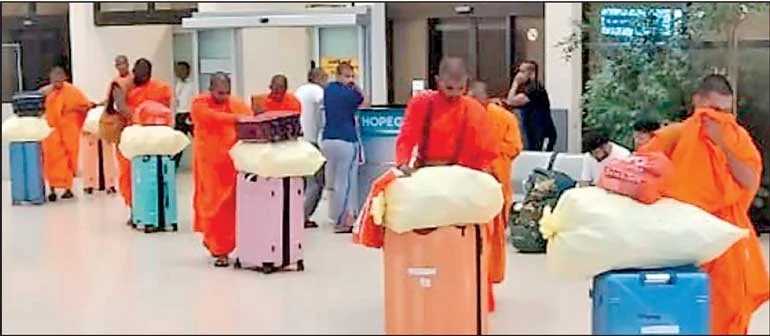
Buddhist Monks Drug Bust at Sri Lankan Airport Sets Record
A stunning Buddhist monks drug bust unfolded at Sri Lanka’s main international airport on Sunday, when authorities arrested 22 Sri Lankan monks returning from Thailand with a staggering 242 pounds of potent cannabis stashed in their luggage. The seizure now stands as the largest single detection of its kind at the country’s primary aviation hub.
The group had just wrapped up a four-day holiday in Bangkok and was making its way back home when officials at customs uncovered the massive haul. The drug in question was Kush, a particularly powerful strain of cannabis that has become a growing concern for South Asian authorities.
Hidden Inside False Walls
According to a spokesperson from Sri Lanka Customs, each monk had roughly five kilograms of the narcotic concealed within fake compartments built into their luggage. The use of false walls suggests this was no spontaneous decision but rather a deliberately planned smuggling operation, raising serious questions about who organized the scheme.
After the seizure, the monks were handed over to police custody and were scheduled to appear before a magistrate later the same day.
A Sponsored Vacation Turns Disastrous
Most of those arrested were young monks who studied at temples scattered across Sri Lanka. Their trip to Bangkok had reportedly been funded by an unnamed businessman, a detail that has only deepened public curiosity about the circumstances surrounding their journey.
What started as a generous gesture from a benefactor has now turned into a sprawling investigation that could potentially uncover the true masterminds behind the operation. Authorities are likely to dig deeper into the financial trail, the businessman’s identity, and the extent to which the monks themselves were aware of what they were carrying.
A Familiar Airport for Drug Seizures
This latest case isn’t the first major drug bust to make headlines at Colombo’s main airport. In May of last year, a 21-year-old British national named Charlotte May Lee was arrested with 101 pounds of Kush at the same location. Lee, who had reportedly flown in from Bangkok to renew her Thai visa, denied knowing anything about the drugs and claimed someone had planted them in her luggage at her Bangkok hotel.
Sri Lankan customs officers also made another notable bust in June 2025, seizing the country’s largest-ever cocaine haul at the same airport. A 38-year-old Thai woman was caught with around 22 pounds of cocaine cleverly hidden inside three plush toys, an unusual concealment method that briefly grabbed international headlines.
Beyond the airport, Sri Lankan authorities have also intercepted multiple major drug shipments arriving via small fishing boats along the country’s coastlines in recent years, signaling a broader smuggling problem that extends well beyond air travel.
Not the First Time Monks Have Made Headlines
While the religious robes might suggest piety and discipline, this isn’t the first time monks have found themselves on the wrong side of drug laws. In 2022, every single monk at a Buddhist temple in central Thailand was defrocked after each one tested positive for methamphetamine. Following the disgrace, they were sent to a health facility to begin drug rehabilitation programs.
A more extreme case unfolded in 2017, when police in Myanmar arrested a Buddhist monk after discovering more than four million methamphetamine pills hidden in his car and within his monastery. That single bust ranked among the largest meth seizures recorded in the region at the time.
Why Kush Is Such a Concern
Kush, the strain involved in this latest case, has gained notoriety for its high potency compared to traditional cannabis. Its rising presence in South Asian smuggling routes has alarmed regional law enforcement, especially as smugglers grow increasingly creative with their concealment methods.
The choice to use young religious students as carriers reflects a worrying tactic that traffickers seem willing to exploit. Members of religious communities are often perceived as less likely to attract suspicion, making them attractive targets for organizers seeking to move drugs across borders unnoticed.
What Comes Next
As the investigation moves forward, authorities will likely focus on identifying the businessman who sponsored the trip and uncovering the broader network behind the operation. The 22 monks themselves now face serious legal consequences under Sri Lanka’s strict narcotics laws, which carry significant penalties for trafficking offenses.
For Sri Lankan customs officials, the seizure represents a major victory in their ongoing fight against international drug smuggling. For the country’s Buddhist community, however, the incident has cast an uncomfortable spotlight on a deeply shocking betrayal of religious values, leaving many to wonder how such a large group of monks could become entangled in something so disturbing.
Whatever the final outcome, this case is likely to be remembered as one of the most extraordinary drug busts in Sri Lanka’s history, both for the sheer volume of narcotics involved and for the unusual identity of those caught carrying them.