


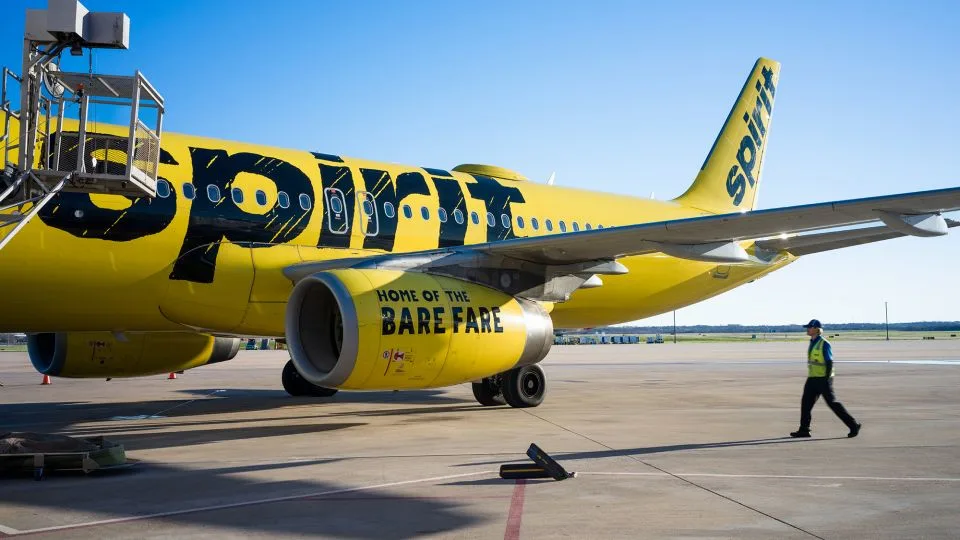
White House Spirit Airlines Takeover Plan Could Reshape American Aviation and Military Transport
The White House Spirit Airlines takeover is one of the most surprising stories to emerge from Washington this week, and the implications are genuinely fascinating. According to a CBS News report, the Trump administration is seriously considering a plan to take over the struggling budget carrier and use its fleet to transport U.S. soldiers and military equipment. The proposal involves invoking a powerful federal law not commonly associated with airline industry intervention, and it could mark one of the boldest government interventions in private industry in recent memory.
If this plan moves forward, it would represent a remarkable convergence of business rescue, national security, and creative policymaking. Here’s everything we know about what’s being considered and why it matters.
A Twist No One Saw Coming
When you think about how the federal government might address a struggling airline, having the Pentagon use it to transport troops probably isn’t the first solution that comes to mind. Yet that’s exactly what the Trump administration is reportedly evaluating for Spirit Airlines.
The carrier has had a rough couple of years. Spirit Airlines has declared bankruptcy twice in the past two years, and the company’s financial troubles have raised serious questions about its long-term viability. The proposed government intervention could provide both an economic lifeline for the airline and a practical resource for military operations.
According to CBS News, citing U.S. officials, the White House is considering invoking the Defense Production Act to facilitate this unique arrangement. The Defense Production Act, originally passed in 1950 during the Korean War, gives the president broad authority to direct domestic industry during national emergencies.
Trump Speaks Out About the Plan
The day before the CBS News report, President Donald Trump addressed reporters in the Oval Office about the possibility of an administration stake in Spirit Airlines. His comments were direct and revealing about how he’s thinking about the situation.
According to Trump, the administration is looking at helping Spirit because the airline employs about 18,000 people across the country. He described these workers as great people and great employees who he’d like to help. The president went further, suggesting that the government might just buy the airline outright rather than simply providing a bailout.
Trump’s reasoning highlighted several interesting points. He noted that Spirit could be acquired virtually debt-free, that the airline has good aircraft and assets, and that when oil prices come down, the government could potentially sell the company for a profit. The president emphasized his desire to save both the jobs and the airline itself.
This kind of frank discussion about a potential government takeover of a private airline is unusual to say the least. Most administrations approach industry interventions with much more caution and circumlocution. Trump’s straightforward approach signals that this isn’t just an idle consideration but something the administration is taking seriously.
The Specific Terms Being Considered
The CBS News report provided some specific details about what the proposed deal might look like. The arrangement would reportedly involve the government lending Spirit Airlines $500 million at a reasonable interest rate. This loan would put the government in the top position among Spirit’s debtors during the bankruptcy proceedings.
To protect taxpayer interests, the loan would be secured by Spirit assets that exceed the government’s costs. Additionally, taxpayers would receive a warrant — essentially the right to own 90% of the company after it emerges from bankruptcy.
The Pentagon would then use Spirit’s excess capacity for transporting troops, military cargo, and other missions. After this period of military utilization, the airline would likely be sold to another carrier, potentially generating returns for the government.
This structure is creative because it addresses multiple goals simultaneously. The airline gets the financial support needed to survive bankruptcy. The military gains access to additional transportation capacity. Taxpayers theoretically benefit from the long-term sale of the company. And thousands of Spirit employees keep their jobs.
Understanding the Defense Production Act
The Defense Production Act is a powerful piece of legislation that most Americans rarely think about, but it has played a crucial role in numerous national emergencies over the decades. Originally enacted in 1950 at the start of the Korean War, the law gives the president broad authority to direct domestic industry during times of national emergency.
The act has been used in various contexts throughout its history. Recent examples include the COVID-19 pandemic, when both the Trump and Biden administrations used the law to direct production of medical supplies and vaccines. It’s also been invoked for various national security purposes over the years.
What makes the proposed Spirit Airlines application particularly interesting is the creative use of the law. Rather than simply directing the airline to produce specific goods or services, the administration is reportedly considering using the act to essentially restructure ownership of the company in ways that benefit both military readiness and the broader economy.
Why Spirit Airlines Has Struggled
To understand why this intervention is even being considered, it helps to look at why Spirit Airlines has been in such trouble. The budget carrier has faced a perfect storm of challenges in recent years.
Rising fuel costs, increased competition, operational difficulties, and pandemic-related disruptions have all weighed on the company’s finances. Spirit’s ultra-low-cost business model, which once seemed innovative, has faced serious pressure as larger carriers have introduced their own basic economy fares to compete with budget airlines.
Two bankruptcy filings in two years is a dire signal for any company. It suggests fundamental problems that simple cost-cutting or operational adjustments haven’t been able to solve. Without significant intervention, the airline’s future is genuinely uncertain.
The Military Transport Angle
One of the most intriguing aspects of the proposed plan is the use of Spirit aircraft for military transport. The Pentagon already maintains substantial transport capacity through its own military aircraft, but commercial aviation has long played a supporting role in moving personnel and cargo.
The Civil Reserve Air Fleet program, for example, allows the U.S. military to draw on commercial airlines during emergencies. This program has been activated multiple times throughout history, including during the Iraq and Afghanistan wars. However, what’s being proposed for Spirit goes beyond this traditional model.
Using Spirit’s excess capacity directly for military missions could provide additional flexibility for the Pentagon while ensuring the airline has steady revenue during a difficult period. It’s an unconventional arrangement, but it has historical precedents in various forms.
Implications for Spirit Airlines Employees
For the approximately 18,000 people who work for Spirit Airlines, this proposed deal represents something close to salvation. Job losses in the aviation industry are particularly painful because many roles require specialized training and experience that doesn’t transfer easily to other industries.
Pilots, flight attendants, mechanics, ground crew, and corporate staff would all benefit from a successful intervention that keeps the airline operating. While the long-term outlook would still depend on the company’s eventual sale to another carrier, having a bridge through the current crisis would preserve thousands of livelihoods.
This human element clearly resonated with President Trump in his comments to reporters. His emphasis on saving jobs reflects an understanding that government interventions affect real people, not just balance sheets and stock prices.
Implications for Travelers
For travelers who rely on Spirit Airlines for budget-friendly flights, the proposed government intervention could ensure continued service options. Spirit has long been one of the most affordable carriers in the U.S. market, particularly for leisure travelers heading to popular vacation destinations.
If Spirit were to fail without intervention, those low-cost options could disappear or shift to other carriers that might not maintain the same pricing structure. Saving the airline preserves competition in the market, which generally benefits consumers through lower fares and more route options.
However, the period during which Spirit’s planes are being used for military transport could create some operational challenges. Reducing commercial capacity to accommodate military missions might mean fewer available flights or different scheduling than passengers are accustomed to.
Implications for the Aviation Industry
The broader U.S. aviation industry would feel the effects of this proposed intervention in various ways. Other budget carriers like Frontier Airlines, JetBlue, and Allegiant compete in similar market segments and would have to assess what the government’s involvement with Spirit means for their own competitive positions.
Major legacy carriers — American, Delta, and United — might also benefit indirectly from a stabilized Spirit Airlines that could eventually be sold to one of them or to another buyer. Industry consolidation has been an ongoing trend, and a managed transition for Spirit could fit into broader strategic plans.
The aviation industry’s relationship with government has always been complex. Airlines have received various forms of support over the decades, from infrastructure investments to pandemic-era bailouts. But direct government ownership, even temporarily, would represent a significant escalation of this relationship.
Political and Economic Considerations
A move like this is bound to generate political reactions across the spectrum. Supporters might praise the creative thinking and concrete benefits for workers and military readiness. Critics could argue that it represents government overreach or sets a problematic precedent for future industry interventions.
Free-market advocates often have concerns about government involvement in private business decisions, particularly when it goes beyond regulation into direct ownership. On the other hand, those who see legitimate roles for government in addressing market failures might view this as a reasonable response to a specific situation.
The economic implications also depend heavily on execution. If the government can successfully save Spirit, use it productively for military purposes, and eventually sell it for a reasonable return, the deal could prove beneficial on multiple fronts. If any of these elements goes wrong, the costs to taxpayers could be substantial.
Historical Precedents
While the specific arrangement being proposed for Spirit Airlines is unusual, government intervention in airlines isn’t entirely new. The federal government has provided various forms of support to U.S. airlines throughout history, especially during times of crisis.
After the September 11, 2001 terrorist attacks, the government provided substantial financial support to airlines facing collapse. During the COVID-19 pandemic, airlines received billions of dollars in federal aid to keep workers employed and operations running.
Even more relevant historically, the U.S. government once owned significant stakes in airlines through various programs, particularly during World War II. Pan American World Airways received substantial government support that essentially functioned as a public-private partnership.
These precedents suggest that government involvement in aviation isn’t unprecedented, even if the specific Spirit Airlines proposal would be unique in its details.
What Happens Next?
As of this report, the Spirit Airlines takeover remains in the consideration phase. Various government officials and Spirit’s management would need to work out specific details, gain necessary approvals, and navigate the bankruptcy proceedings already underway.
Several questions remain unanswered:
- Would Spirit Airlines management support this arrangement?
- How would creditors react to having the government as the top debtor?
- What specific military missions would Spirit aircraft be used for?
- How long would the government’s involvement last?
- Which carrier might eventually purchase Spirit after the government’s involvement ends?
The answers to these questions will shape whether this proposal moves from speculation to reality, and what its ultimate impact will be.
Final Thoughts
The White House Spirit Airlines takeover represents one of the more creative government intervention proposals in recent years. By combining airline rescue, military logistics, and eventual privatization into a single package, the administration is attempting to address multiple challenges simultaneously.
For Spirit Airlines, the proposal offers a potential path forward from its current bankruptcy proceedings. For the U.S. military, it provides additional transport capacity at a time when global tensions create ongoing operational demands. For taxpayers, it offers the possibility of recovering investment costs through the eventual sale of the company. For 18,000 employees, it represents a chance to keep their jobs.
Whether this plan ultimately moves forward will depend on numerous factors, including political support, legal feasibility, financial details, and the cooperation of various stakeholders. The use of the Defense Production Act would represent a notable expansion of how that law is applied, potentially setting precedents for future industry interventions.
As this story continues to develop, it’s worth watching closely. The intersection of business, military, and policy decisions doesn’t get more interesting than this. Whatever the outcome, the proposed Spirit Airlines takeover demonstrates that creative thinking about America’s economic and security challenges remains alive and well in Washington — for better or worse, depending on your perspective.