


















US Soldier Arrested After Winning $400,000 Betting on Maduro’s Capture on Polymarket
A US soldier charged on Polymarket for betting on the removal of Venezuelan leader Nicolas Maduro has become the center of one of the most unusual insider trading cases in recent American history. The Department of Justice (DOJ) says the soldier used classified military information to place bets on a crypto-based prediction platform, pocketing more than $400,000 in the process.
The case has raised fresh concerns about how online prediction markets intersect with national security and whether existing laws can keep up with this fast-evolving corner of the internet.
Who Is the Soldier Behind the Bets?
The accused is Gannon Ken Van Dyke, an active-duty soldier in the US Army stationed at Fort Bragg in North Carolina. According to federal prosecutors, Van Dyke was not just an ordinary service member. He was part of a US special forces unit directly involved in the highly sensitive operation that led to the capture of Nicolas Maduro and his wife, Cilia Flores.
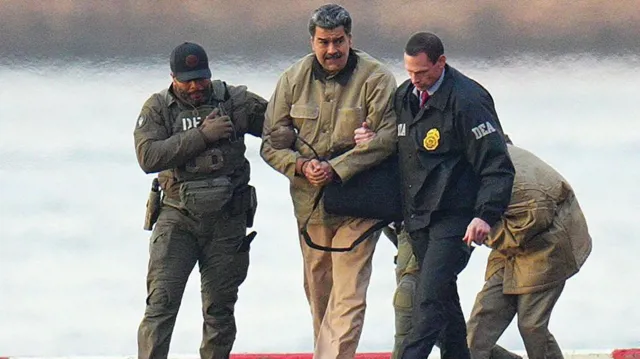
That mission, known as Operation Absolute Resolve, took place on 3 January, when US forces conducted a dramatic night-time raid on the couple’s compound in Caracas. Maduro and Flores were flown to New York to face charges related to alleged weapons and drug offences, both of which they have denied.
While many Americans only learned about the operation after it happened, Van Dyke, investigators say, knew about it well in advance, and allegedly used that knowledge to make money.
What the DOJ Says Happened
According to the indictment unsealed by the Department of Justice, Van Dyke created a Polymarket account on or around 26 December 2025. Polymarket is a crypto-powered prediction platform where users place bets on real-world events, everything from elections and court rulings to geopolitical outcomes.
Once on the platform, Van Dyke is accused of placing trades worth more than $33,000 on markets tied to Maduro and Venezuela. Prosecutors say he did so while having direct access to classified, nonpublic details about the upcoming military operation.
When the raid succeeded and Maduro was captured, the markets moved sharply, and Van Dyke’s bets paid off. He reportedly walked away with over $409,000 in winnings.
Justice Department officials did not mince words, describing the activity as a clear case of insider trading that violates federal law.
The Charges He Faces
Van Dyke is now facing a long list of serious federal charges, including:
- Unlawful use of confidential government information for personal gain
- Theft of nonpublic government information
- Commodities fraud
- Wire fraud
- Making an unlawful monetary transaction
Separately, the Commodity Futures Trading Commission (CFTC), an independent federal agency that oversees derivatives and commodities markets, has filed its own complaint, accusing him of engaging in insider trading on the platform.
Prosecutors say that from 8 December 2025 until at least 6 January 2026, Van Dyke was involved in planning and executing Operation Absolute Resolve, giving him detailed visibility into when and how the raid would unfold.
A Breach of Trust and Nondisclosure Agreements
As a soldier, Van Dyke had signed nondisclosure agreements that explicitly prohibited him from sharing classified or sensitive information about military operations in any form, whether spoken, written, or acted on.
Acting US Attorney General Todd Blanche emphasized how seriously the government takes this kind of breach. Service members, he said, are trusted with classified information so they can complete their missions safely and effectively, not so they can turn that information into personal profit.
Blanche also noted that although prediction markets are relatively new, the federal laws protecting national security information still apply fully, regardless of where or how the trades are made.
US Attorney Jay Clayton, whose office in the Southern District of New York will handle the case, echoed that point, warning that prediction markets are not a loophole for people looking to cash in on stolen or classified information.
Polymarket’s Response
Polymarket, the platform at the heart of the case, has tried to get ahead of the controversy by highlighting its cooperation with investigators. In a statement posted on social media, the company said it had identified a user trading on what appeared to be classified government information and referred the matter directly to the DOJ.
The platform insisted that insider trading has no place on Polymarket, calling the arrest proof that its monitoring system is working as intended. Still, the case is likely to reignite debate over how well such platforms can actually police themselves, especially as they grow in popularity and handle an increasing range of sensitive, real-world events.
Trump Reacts: “The Whole World Has Become a Casino”
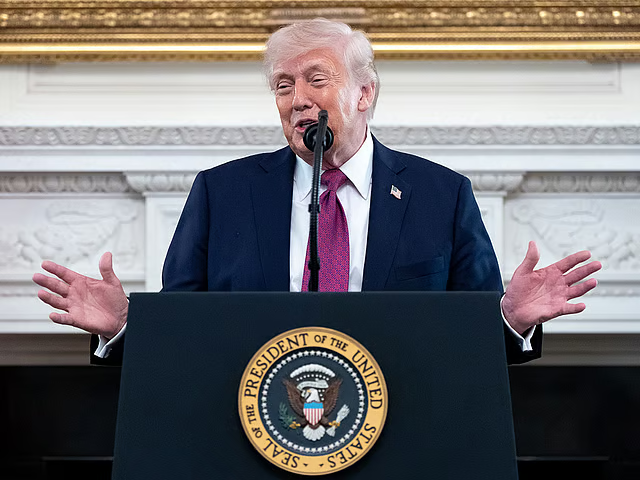
Asked about the arrest during an unrelated event, US President Donald Trump said he had not yet heard the details but promised to look into the matter.
On the broader question of prediction markets and insider trading, Trump was noticeably cool to the whole idea. He said he was not happy with “any of that stuff,” adding that the world has increasingly started to feel like a giant casino, with betting markets springing up across Europe and elsewhere. He made it clear he had never been a fan of that trend.
Reports also indicate that White House staff have been told not to place bets on prediction markets, a sign that the administration is taking the issue of potential conflicts of interest and information leaks seriously.
Why This Case Matters
This case is striking for several reasons that go well beyond the eye-catching $400,000 payout.
First, it involves a uniformed member of the US military allegedly betting on the outcome of a mission he helped carry out. That is a direct challenge to the trust placed in service members who handle classified information.
Second, it spotlights the rise of crypto-based prediction markets like Polymarket, where users can bet on nearly any major global event. These platforms offer transparency and real-time price signals, but they also create new opportunities for people with insider knowledge to profit in ways that can be hard to detect.
Third, it raises tough questions for regulators. Traditional insider trading laws were built around stock markets and corporate information. Now, authorities are being forced to apply those same principles to decentralized, internet-based betting platforms that operate across borders.
The Bigger Picture: Prediction Markets Under the Microscope
Prediction markets have grown rapidly in recent years, fueled by interest in elections, geopolitics, sports, and even pop culture. Supporters argue they can be surprisingly accurate forecasting tools because they aggregate the views of thousands of people with real money on the line.
But cases like this one show the darker side of that promise. When someone has privileged access to information that the rest of the market does not, the playing field tilts, and the outcomes stop reflecting public knowledge and start reflecting insider leaks.
Expect to see:
- More scrutiny from agencies like the DOJ and CFTC on how these platforms operate.
- Tighter internal rules for government employees, military personnel, and contractors about participating in prediction markets.
- Ongoing debate about whether certain types of markets, especially those tied to national security events, should be restricted or more closely monitored.
What Happens Next for Van Dyke
Van Dyke’s case will now move through the federal court system in the Southern District of New York. If convicted on the range of charges he faces, he could be looking at significant prison time, heavy fines, and the forfeiture of his winnings.
For the US military, the case is an uncomfortable reminder of the risks that come with placing immense trust in individual service members, particularly those operating inside elite special forces units.
For Polymarket and similar platforms, it is both a warning and, in a strange way, a vindication. The company will argue that its monitoring systems caught the suspicious activity and helped bring the case forward. Critics, however, may still ask how often such activity goes unnoticed.
A Sign of the Times
The story of a US soldier charged on Polymarket for betting on Maduro’s capture feels almost tailor-made for the current moment: a mix of high-stakes geopolitics, cutting-edge crypto platforms, and age-old human temptation to turn secret information into easy money.
As prediction markets continue to grow and global events keep generating new betting opportunities, regulators, tech companies, and governments will all be watching cases like this one very closely. The outcome may shape how freely these platforms can operate, and how tightly the people with access to sensitive information are kept away from them.
One thing is already clear. In the eyes of US prosecutors, a uniform and a Polymarket account are a combination that will now attract very serious attention.