


















Iran War Day 57: Trump Sends Top Negotiators to Pakistan as Diplomatic Push Intensifies
Iran war day 57 has brought a flurry of diplomatic activity that could reshape the trajectory of the ongoing conflict. With tensions still running high across the Middle East, Washington has decided to make a significant move by sending two of its most trusted envoys, Steve Witkoff and Jared Kushner, to Pakistan for direct talks aimed at breaking the diplomatic deadlock with Tehran.
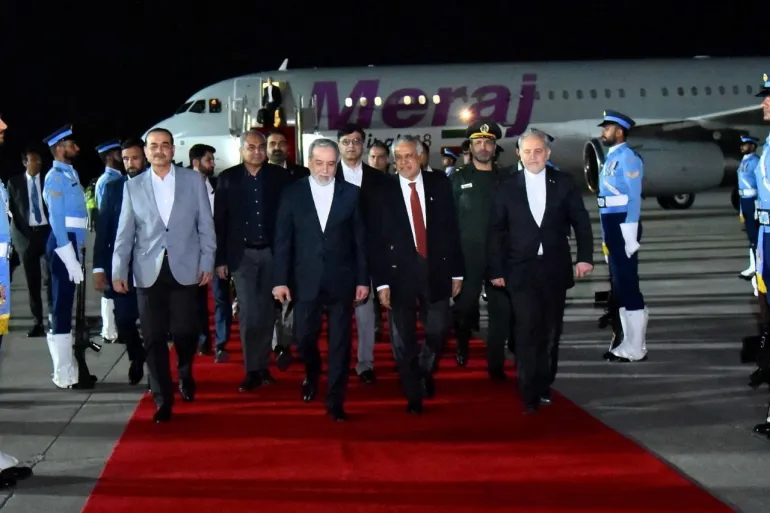
At the same time, Iranian Foreign Minister Abbas Araghchi touched down in Islamabad with a small delegation, signaling that despite weeks of stalled communication, neither side has fully closed the door on negotiations. Pakistan, stepping into the role of mediator, now finds itself at the center of one of the most consequential diplomatic efforts of the year.
A Critical Turning Point in the Conflict
The war between Iran and the United States, along with its regional spillover effects, has now stretched into its 57th day. Negotiations have been frozen for weeks, leaving global observers questioning whether either side would re-engage. The arrival of senior American envoys in Pakistan suggests that quiet diplomacy may finally be gaining traction.
US Secretary of Defense Pete Hegseth reinforced this sentiment, noting that Iran still has what he described as an open window to negotiate a deal. According to Hegseth, Tehran could still walk away from its pursuit of nuclear weapons through what he called meaningful and verifiable steps. The message from Washington appears to be one of cautious openness, paired with continued pressure.
Pakistan Steps Into the Mediator’s Role
Islamabad’s involvement is one of the most striking developments of the day. Reporting from Pakistan suggests that mediators there are cautiously optimistic. While there is no confirmation yet of direct face-to-face talks between American and Iranian officials, the mere fact that both sides are willing to operate in the same city points to renewed momentum.
Al Jazeera’s reporting from Tehran noted that no formal sit-down has been scheduled for now, but diplomatic activity continues behind the scenes. Araghchi has been traveling across regional capitals, and Pakistan’s mediation role is being treated as serious and substantive rather than symbolic.
Financial Pressure Mounts on Tehran
Even as diplomacy unfolds, Washington is tightening the financial screws on Iran. Treasury Secretary Scott Bessent announced that the United States has frozen 344 million dollars worth of cryptocurrency assets connected to Iranian interests. The freeze is being framed as part of a broader strategy to weaken Tehran’s economic flexibility while energy supply disruptions caused by the war intensify globally.
This financial squeeze is happening alongside fresh sanctions targeting Iran’s oil network. The US has imposed restrictions on a major refinery based in China, along with roughly 40 shipping firms and tankers accused of transporting Iranian oil. The message is clear: Washington wants to make sure that any economic lifeline to Tehran is steadily cut off.
Oil Waivers Off the Table
In a notable policy shift, Bessent told The Associated Press that the United States will not extend waivers for Russian oil shipments still in transit. He went a step further regarding Iranian oil, calling any potential extension completely out of the question given the ongoing blockade. This hardline stance is expected to ripple through global energy markets in the coming weeks.
The Strait of Hormuz Question
European Council President Antonio Costa weighed in on one of the most pressing economic concerns of the conflict. After holding talks with leaders from Lebanon and Syria, Costa called for the immediate reopening of the Strait of Hormuz. He insisted that the vital waterway must operate without restrictions and without any tolling system in place.
The Strait of Hormuz is one of the world’s most strategically important shipping routes, and its disruption has been a major factor pushing energy prices into volatile territory throughout the war.
Unprecedented US Military Buildup
In another significant development, the US military confirmed that it now has three aircraft carriers stationed in the Middle East simultaneously. This is a level of naval concentration not seen in the region since the 2003 invasion of Iraq. The deployment underscores how seriously Washington is treating both the military dimension of the conflict and the possibility that diplomacy could collapse at any moment.
A Drone Incident in Kuwait Raises Alarms
Adding to the regional unease, two drones launched from Iraqi territory struck northern Kuwaiti border posts. Kuwaiti authorities reported damage to the facilities but confirmed there were no casualties. Iraq’s Interior Minister Abdul Amir al-Shammari announced that an official investigation has been opened.
Such incidents highlight how easily the conflict can spread beyond its central players, drawing in neighboring countries and complicating any path to resolution.
Israel and Lebanon: A Parallel Conflict
While the world watches Iran and the United States, Israeli Prime Minister Benjamin Netanyahu has been making waves of his own. Netanyahu accused Hezbollah of attempting to sabotage what he described as a historic peace deal in the works with Lebanon. His comments come at a sensitive moment, with multiple parallel diplomatic threads running across the region.
On the ground, the Israeli military said it killed six Hezbollah fighters in a southern Lebanese town during what it described as an exchange of fire. In return, Hezbollah claimed responsibility for downing an Israeli drone using a missile. Israeli authorities later confirmed the loss of the drone, validating Hezbollah’s account.
Continued Violence in Gaza
The humanitarian toll in Gaza continues to grow. According to medical staff and local officials, at least 12 Palestinians, including six police officers, were killed in fresh Israeli attacks. The cycle of violence in Gaza shows no sign of slowing, even as broader regional negotiations begin to take shape.
Energy Markets Brace for Continued Strain
The International Energy Agency issued a sobering forecast about global energy markets. The agency stated that the liquefied natural gas market, already strained by the ongoing war, will remain tight through both 2026 and 2027. This means consumers and industries worldwide should prepare for sustained pressure on energy prices and supply availability.
Oil markets had a mixed day. Brent crude futures edged higher and closed above 105 dollars per barrel, while West Texas Intermediate, the American benchmark, dropped 1.5 percent to settle at 94.40 dollars per barrel. Despite the energy market turbulence, equity markets surged. The S and P 500 rose by 0.8 percent, pushing the benchmark for American stocks to a fresh all-time high.
What Does Day 57 Tell Us?
Several key takeaways emerge from the events of day 57:
- Diplomacy is fragile but alive. Both sides are still willing to engage indirectly through Pakistan.
- Economic pressure is escalating. Cryptocurrency freezes and expanded sanctions show Washington is not pulling back.
- Military posturing remains strong. Three aircraft carriers in the region signal serious readiness.
- Regional spillover is real. Drone strikes in Kuwait and ongoing violence in Lebanon and Gaza prove the conflict is far from contained.
- Energy markets are bracing for the long haul. The IEA warning suggests no quick relief is in sight.
Looking Ahead
The next few days will be critical. With American envoys and Iran’s foreign minister both in Islamabad, the question is whether Pakistan can broker even a preliminary meeting. A breakthrough, even a small one, could shift global sentiment dramatically. On the other hand, a failure to engage could push the conflict into an even more dangerous phase, particularly with such a heavy US military presence in the region.
For now, the world watches and waits. Day 57 has not delivered peace, but it has delivered movement, and in a war this complex, movement matters.
Final Thoughts
The Iran war day 57 update paints a picture of a conflict at a delicate inflection point. Diplomacy is being attempted, pressure is being applied, and the human cost continues to mount. Whether the talks in Pakistan lead to genuine de-escalation or simply mark another false start remains to be seen. What is certain is that the decisions made in the coming days will shape not just the future of Iran and the United States, but the broader stability of the Middle East and the global economy.