



















UC Berkeley Phone-Free Movement: Students Lead a Bold Rebellion Against Screen Addiction
The UC Berkeley phone-free movement is taking root on one of America’s most progressive campuses, with students literally burying social media apps in symbolic graveyards while reclaiming what they call stolen years of their lives. On a bright Friday afternoon at Memorial Glade, the green heart of UC Berkeley’s campus, students transformed an ordinary lawn into ground zero for a generation pushing back against constant digital connection.
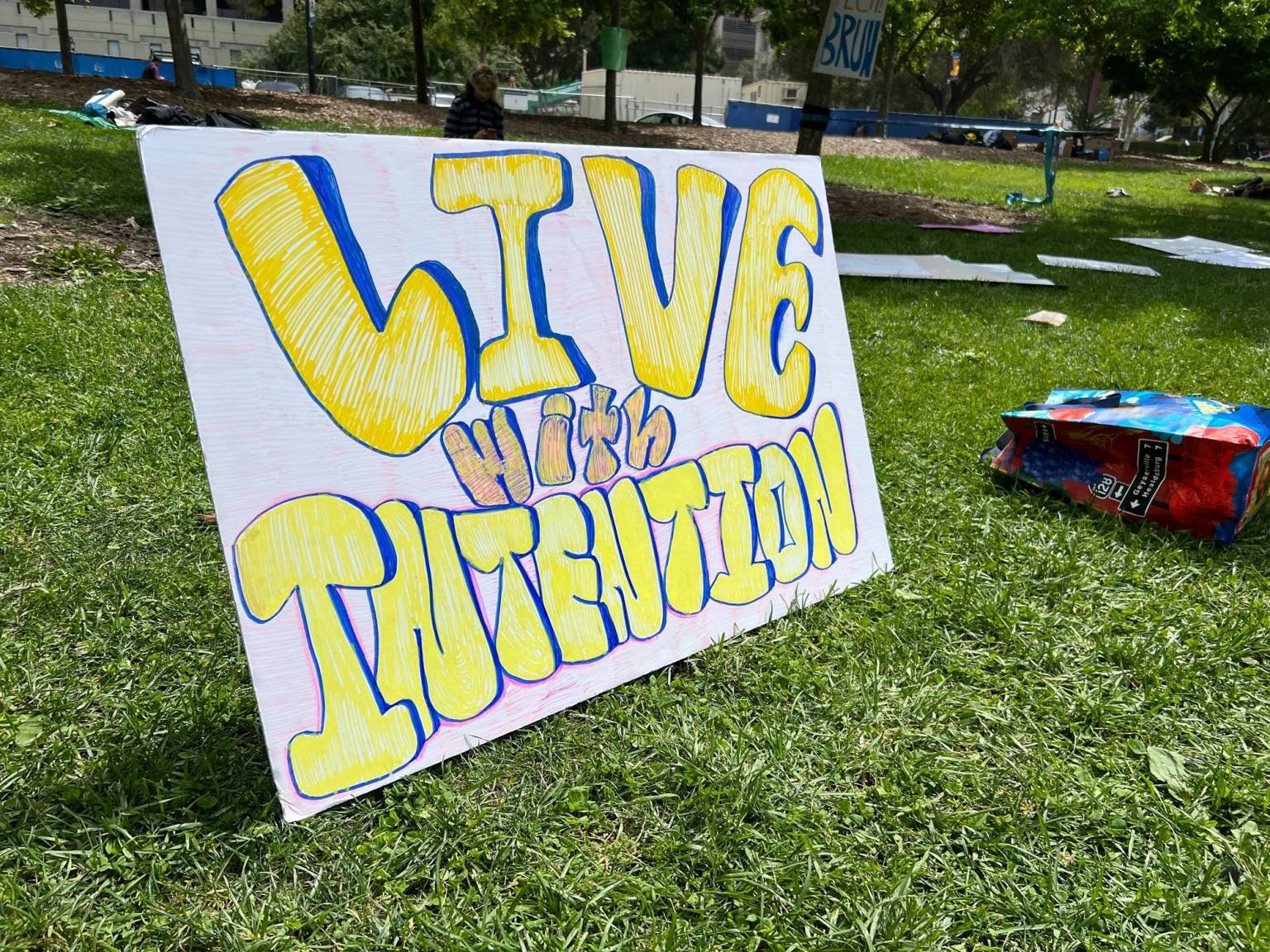
The scene looked refreshingly old-school. Volleyball nets stretched across the grass, cornhole boards waited for players, picnic blankets dotted the lawn, and a makeshift plywood stage hosted live music. The mission behind all this analog joy? Throwing what organizers called a phone-free party.
Setting the Tone
Music pumped from speakers stationed near snack tables, while colorful handwritten signs delivered pointed messages. Phrases like “Favorite app? Delete it” and “Take back your mind” weren’t subtle, but subtlety wasn’t the point. At the check-in table, attendees had the option to lock their phones in plastic bags, fully cutting themselves off from notifications for the duration of the gathering.
Perhaps the most striking visual element involved cardboard gravestones propped throughout the space, each one displaying the logo of a different social media platform. The message landed without anyone needing to explain it.
The Organization Behind It All
The event came courtesy of Project Reboot, a student-led organization that originated right on Berkeley’s campus. Their stated mission focuses on helping young people reset their tech habits, reclaim their time, and regain their focus, words that resonate increasingly with students drowning in algorithmic feeds.
What makes Project Reboot interesting is how it started. Rather than launching as a flashy movement, it began as a semester-long class designed to help students actually reduce their screen time in measurable ways. That academic foundation gives the movement intellectual credibility while keeping it grounded in real student experience.
Voices From the Movement
Dawson Kelly, a third-year student who helped host the event, didn’t pull punches when describing his generation’s relationship with technology. He suggested screen addiction has essentially become a birthright for people his age, and he’s currently writing his thesis on digital dependence.
Kelly argues that his generation needs better infrastructure to reclaim time and personal agency. He pushed back against the popular characterization of his peers as the anxious generation, framing the work of Project Reboot as a deliberate refusal to accept that label.
Sahar Yousef, a neuroscientist and lecturer at Berkeley who sits on Project Reboot’s research advisory board, has watched this resistance build organically. According to her, students are increasingly fighting back against the assumption that they should always be on their phones, constantly scrolling. She emphasized that the demonstration was entirely student-driven, representing what young people feel has been stolen from them.
The Numbers Tell a Story
A survey of UC Berkeley undergraduates revealed something striking: 78% of students believe their phone usage actively prevents them from thinking deeply, being creative, or fully engaging with ideas. That’s not a small minority feeling vaguely uneasy. It’s an overwhelming majority recognizing that something is genuinely wrong with how they’re spending their attention.
When more than three-quarters of students at one of America’s top universities openly admit their devices are interfering with their cognitive lives, that’s data worth taking seriously.
Real Students, Real Changes
Third-year students Ashlyn Torres and Izzy Newman discovered the Friday event through an old-fashioned flier rather than the usual Instagram or TikTok promotion. Torres deliberately left her phone at home before showing up, and the experience proved revelatory.
She described the morning as remarkably different because she could actually recognize the life happening around her. Torres reflected that people probably need to talk to each other more and listen to what the actual world offers, rather than only consuming what their phones serve up.
Jonny Vasquez, another third-year student and vocal advocate for reducing screen time on campus, has taken his message to the streets. He started standing in busy campus areas holding a simple sign reading “Lowest screentime contest.”
The reactions split predictably. Some students completely ignored him, while others approached with what sounded like genuine relief, expressing they’d been waiting for someone to help address this issue. After deleting his own social media accounts, Vasquez says he stopped constantly comparing himself to others and now experiences significantly greater life satisfaction.
Practical Strategies Students Share
Throughout the event, attendees swapped concrete tips for creating distance from their devices:
- Plug phones in overnight in spots that require getting out of bed to reach them
- Turn devices completely off during social interactions, not just silent
- Build communities of like-minded peers who hold each other accountable
- Use physical alarm clocks instead of phones to start the day differently
- Leave phones at home occasionally for short outings to relearn presence
These aren’t groundbreaking strategies, but their power lies in collective implementation. When friends commit to phone-free dinners together, the social pressure shifts from staying connected to staying present.
The Deeper Argument
Kelly framed the movement in genuinely radical terms, arguing it’s fundamentally about personal agency. He pointed out that these are the peak years of his generation’s lives, years that have been stolen by corporations earning billions annually by capturing as much human attention as possible.
His prescription is straightforward: fight back through connection and engagement with the kind of life people should have been living from the start. That’s not Luddite rejection of technology, it’s a demand for proportion and intentionality in how digital tools fit into human existence.
Why This Matters Beyond Berkeley
The UC Berkeley phone-free movement reflects something larger than one campus event. Across universities nationwide, students are increasingly questioning whether the technology that has defined their entire conscious lives actually serves their interests or simply extracts their attention for shareholder profit.
Mental health data supporting concerns about smartphone use continues mounting, with research increasingly linking heavy social media consumption to depression, anxiety, and disrupted sleep among young people. When the generation supposedly most native to these technologies starts organizing against them, that’s worth paying attention to.
The Path Forward
Whether Project Reboot expands beyond Berkeley remains to be seen, but the conditions seem ripe for similar movements at other universities. Students everywhere are exhausted by feeds that promise connection while delivering comparison, anxiety, and time poverty.
The Friday afternoon at Memorial Glade demonstrated something simple but powerful. When people put their phones away and actually look at each other, life happens. Conversations deepen, games get played, music gets heard, and presence returns. That’s not nostalgia for an imagined past. It’s recognition of what makes existence meaningful in any era.
For a generation often dismissed as hopelessly addicted to screens, this UC Berkeley phone-free movement suggests a different story is possible, one written with eye contact instead of emoji.