
















King Charles’ U.S. Visit: Inside Britain’s High-Stakes Diplomatic Mission to Trump’s America
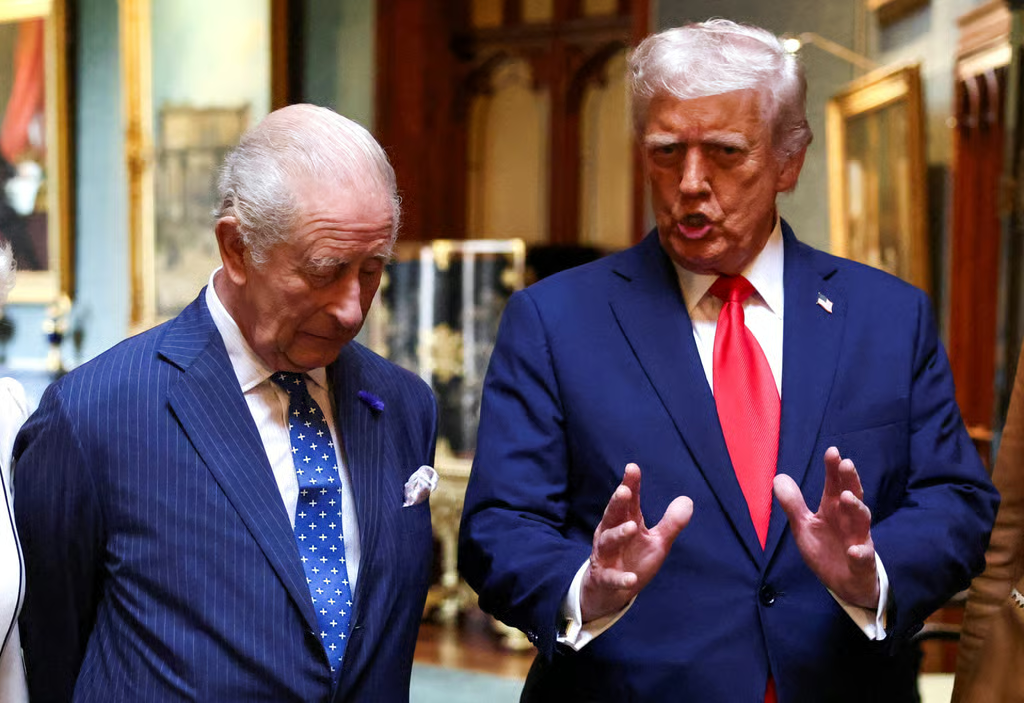
The King Charles U.S. visit beginning this Monday is being watched closely on both sides of the Atlantic. Far from a ceremonial trip, the four-day journey is the product of months of strategic planning by the British government, palace aides, and senior diplomats who hope to repair a fraying transatlantic relationship without rocking the boat any further.
A Royal Mission Loaded With Political Weight
When the king steps off the plane in Washington, his aides will carry a thick ring binder filled with carefully prepared notes, biographies, and timings. Tucked among them will be a list of priorities, written and refined over several weeks, with handwritten notes from Charles’ famous red felt-tip pen.
The trip comes at a delicate moment. Prime Minister Keir Starmer’s relationship with President Donald Trump has been tested over disagreements on the Iran war, immigration policy, and energy production. Some British politicians have even questioned whether the king should make the trip at all. Adding to the unease is the recent shooting at the White House Correspondents’ Dinner, which has heightened security concerns.
According to royal aides, Charles is expected to address the shooting during his speech to a joint session of Congress on Tuesday. The address, which he has reportedly worked on personally, may run closer to 30 minutes, far longer than the 12-minute speech delivered by Queen Elizabeth II during her 1991 visit.
Why This Trip Matters So Much for Britain
Officially, the visit is being framed as a goodwill gesture to mark the 250th anniversary of the United States. Behind the scenes, however, the goals run much deeper.
According to insiders who spoke with POLITICO, the U.K. has set the bar low but the stakes high. The simple aims are to:
- Rebuild trust between the two governments
- Keep Trump in a positive mood toward Britain
- Maintain the warmth that has historically defined the U.S.-U.K. relationship
One person involved in the planning summed it up bluntly, saying that the king can probably push only one major issue, and the question is which one.
Ukraine: The Cause Closest to Charles’ Heart
A leading candidate for that single push is the war in Ukraine. With Trump distracted by midterm elections and the ongoing conflict involving Iran, British officials are concerned that support for Kyiv could slip down Washington’s priority list.
Sources familiar with the king’s thinking say Ukraine is an issue he genuinely cares about, perhaps more than trade or technology. While Buckingham Palace warned against speculating about his personal views, his actions in past meetings have suggested where his sympathies lie.
During Trump’s U.K. state visit last year, Queen Camilla wore blue and First Lady Melania Trump wore yellow, the colors of the Ukrainian flag. Insiders insist that detail was not accidental.
Defense, NATO, and the Falklands Question
Defense ties are another major focus. Britain is expected to highlight its role in NATO operations, particularly efforts to counter Russian activity in the Arctic. A planned visit to Arlington National Cemetery is meant to underscore that bond.
There are concerns, however. A leaked Pentagon email recently hinted that the U.S. could review its recognition of British sovereignty over the Falkland Islands. Any mention of that issue by Trump during the visit could quickly become a major problem.
There is also pressure on Britain to accelerate its defense spending toward 3.5 percent of GDP by 2035, a target heavily influenced by Trump himself. Former NATO Secretary-General George Robertson recently signaled that Britain appears to be moving in that direction.
Foreign Secretary Yvette Cooper will travel with Charles for almost the entire trip and will break away on Tuesday for separate talks with U.S. Secretary of State Marco Rubio.
A Style of Diplomacy Built on Symbolism
Royal diplomacy rarely relies on direct words. As one former senior British official put it, the royal approach is “show don’t tell.” Subtle gestures, carefully chosen outfits, and symbolic locations often communicate more than speeches ever could.
A clear example came during last year’s banquet for Trump, when the king praised the AUKUS submarine partnership between the U.S., U.K., and Australia. Within weeks, Trump publicly committed to the deal going “full steam ahead.” Insiders saw it as a textbook example of soft, royal-led influence.
Topics Both Sides Want to Avoid
Some subjects are quietly being kept off the agenda. Among them:
- The Jeffrey Epstein scandal, which continues to involve figures connected to both the palace and Downing Street
- Climate change, despite being one of Charles’ lifelong passions
- Trump’s controversial new White House ballroom, a tricky topic for a king known for his strong opinions on architecture
Buckingham Palace has rejected calls for the king or queen to meet Epstein’s victims during the visit, and parliamentary hearings on related matters will take place back home while Charles is in Washington.
Trade Talks Behind the Scenes
While the king will not personally negotiate trade, his visit is providing valuable cover for British officials trying to revive stalled deals. Two key agreements struck last year, one on technology and another on economic cooperation, remain unfinished.
Trump has recently threatened tariffs over the U.K.’s digital services tax, which targets several large American tech firms. British envoys, including Special Envoy Varun Chandra and Ambassador Christian Turner, are expected to use the visit as an opportunity to continue trade conversations quietly.
A Carefully Hidden Layer of Government Planning
Although royal visits are presented as palace-led, in reality this trip has been months in the making across Whitehall. A “royal visits committee” involving Downing Street, the Cabinet Office, the Foreign Office, and the Department for Business and Trade has reviewed every detail.
Recent political turbulence within Starmer’s government has even shifted leadership of the committee, but planning has continued steadily, particularly through the British Embassy in Washington.
Could Charles Outlast Starmer’s Premiership?
With Starmer facing internal challenges from his own party ahead of major elections on May 7, some British officials are quietly considering how to position the king as a stable bridge to Trump, even if the prime minister is replaced.
Trump has often reserved warm words for Charles while criticizing Starmer. Maintaining that distinction may help Britain preserve influence regardless of political turmoil at home.
A Trip He Was “Born to Do”
Reports suggest the king is not personally enthusiastic about the visit. Still, allies insist he will rise to the occasion, drawing on decades of public service and diplomatic experience.
As one royal aide put it, this is, in the most literal sense, what he was born to do. And whether through symbolism, speeches, or quiet conversations, Charles will aim to do it with the kind of skill that only a lifetime of royal duty can provide.