


















Sam Altman AGI Predictions Stir Buzz Across the Tech World
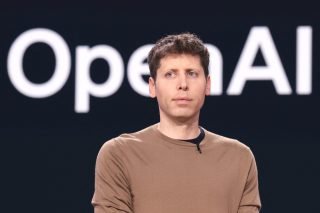
Sam Altman AGI commentary has once again grabbed the spotlight, with the OpenAI CEO making waves on X (formerly Twitter) through a pair of eye-catching posts. In one, Altman warned that artificial general intelligence could lead to economic collapse. In another, he revealed that he is so hooked on OpenAI’s latest model that he is changing his sleep habits to keep up with it.
The contrast between the two statements has set off a flurry of online discussion, with tech watchers debating whether Altman is genuinely concerned about the future or simply riding another wave of dramatic AI commentary.
The “Economy Will Collapse” Statement
Altman didn’t sugarcoat his outlook in his recent post. He bluntly suggested that once AGI arrives, traditional employment as we know it could vanish, dragging the broader economy down with it.
For those unfamiliar with the term, AGI — short for artificial general intelligence — refers to a hypothetical type of AI that can match or surpass human capabilities across virtually all cognitive tasks. Think learning, reasoning, problem-solving, planning, and creativity, all rolled into a single system that performs as well as or better than people in any domain.
His take is alarming, but it’s also a reflection of a growing camp within Silicon Valley that views AGI as both inevitable and transformative.
Then Came the Polyphasic Sleep Announcement
Hours apart from his economy warning, Altman shared something far more personal. He announced that he is shifting to polyphasic sleep — a pattern in which a person sleeps in multiple short bursts throughout a 24-hour cycle rather than in one long stretch at night.
The reason? GPT-5.5 in Codex, OpenAI’s latest model, is reportedly so impressive that he doesn’t want to lose productive hours to a full night’s sleep. He essentially admitted that the technology is too exciting for him to step away from for very long.
The irony was impossible to miss. The very person warning that AGI might end human work is also the person too captivated by AI to stop working himself.
A Contradiction or a Calculated Message?
Reading Altman’s two posts side by side, it’s hard not to notice the tension between them. One paints a future where humans become irrelevant in the workforce. The other shows a CEO so consumed by the technology that he is rewriting his daily routine just to use it more.
Whether this was intentional commentary or simply unfiltered enthusiasm, the result is the same: Altman managed to spark conversation on both ends of the AI debate at once — the doomers worried about job loss and the optimists thrilled by what’s coming next.
Altman’s AGI Timeline and the Skeptics
Earlier in 2025, Altman publicly predicted that AGI could arrive as soon as 2030. That timeline has been met with plenty of skepticism from other influential voices in the AI industry.
Some leading figures who have pushed back on the AGI narrative include:
- Peter Steinberger, creator of Moltbot, who recently called for “specialised intelligence” over generalised intelligence. Speaking on the Y Combinator podcast, he argued that the industry’s obsession with AGI overlooks how humans and technology actually thrive — through specialisation rather than generalisation.
- Daniela Amodei, president of Anthropic, who reportedly described the AGI concept as “outdated.”
- Demis Hassabis, CEO of Google DeepMind, who has argued that AGI simply cannot be achieved without true “world models” that allow AI systems to understand and reason about the physical environment.
These critiques highlight a broader divide within the AI industry. While some leaders see AGI as the inevitable next milestone, others believe the term has become more of a marketing slogan than a meaningful technical goal.
OpenAI Launches GPT-5.5 in Codex
Altman’s posts coincide with OpenAI’s recent launch of GPT-5.5, which is now available in Codex. According to the company’s announcement, the new model brings major improvements in reasoning, coding, and scientific research while being faster, more efficient, and safer than its predecessor.
Building on the foundation of GPT-5.4, GPT-5.5 introduces several notable upgrades, including:
- Stronger handling of complex multi-step tasks
- Better planning and self-correction
- Improved tool use capabilities
- Standout performance in coding and debugging
OpenAI also revealed that GPT-5.5 hit 82.7% accuracy on Terminal-Bench 2.0, edging out competitors like Anthropic’s Claude Opus 4.7 and Google’s Gemini 3.1 Pro on the same benchmark.
Faster, Smarter, and More Cost-Effective
One of the more striking claims from OpenAI is that GPT-5.5 manages all these gains without sacrificing speed. The new model maintains the same response time as GPT-5.4 while using fewer tokens per task, which translates to lower costs for both developers and enterprise customers.
That combination — better performance, equal speed, and reduced token usage — is exactly what businesses building AI-powered products have been waiting for. It also helps explain why Altman appears so enthusiastic about the model that he’s willing to redesign his sleep schedule around it.
A Glimpse Into the Mind of an AI CEO
Altman’s recent posts offer a fascinating window into the mindset of someone leading one of the most important technology companies of the decade. On one hand, he is openly worried about the societal disruption that advanced AI could trigger. On the other, he is personally drawn to it like few executives ever have been to their own products.
That duality is becoming a defining theme of the modern AI era. The same technology that could displace workers is also captivating the very people building it. Whether AGI arrives in 2030 or far beyond, the conversations Altman keeps starting are shaping how the world prepares for what’s next.
The Bigger Takeaway
The Sam Altman AGI debate isn’t going away anytime soon. Between his warnings about economic collapse, his enthusiasm for GPT-5.5, and the broader industry pushback against AGI as a concept, the AI conversation feels louder and more polarized than ever.
For now, one thing is clear: Altman is not just building the future — he’s actively shaping how the public talks about it, one provocative post at a time.