



















Georgia Wildfires Cause Record Property Losses as Southeast US Battles Devastating Blazes
The Georgia wildfires record property losses making headlines this week mark one of the most destructive fire events the state has ever seen. Governor Brian Kemp declared a state of emergency for 91 counties on Friday as crews battled massive blazes that have already destroyed more than 120 homes and other structures. With drought gripping the region and conditions forecast to remain dangerous, the situation across the Southeast United States is rapidly intensifying.
What started as scattered brush fires has now exploded into a multi state crisis affecting Georgia, Florida, South Carolina, and Alabama. The damage in Georgia alone has been described as historic, and officials are warning that the worst may not be over.
A Pair of Fires Causing Most of the Damage
Two specific fires are responsible for the bulk of the destruction in Georgia. The Highway 82 fire and the Pineland Road fire have together scorched more than 39,500 acres, which is roughly 16,000 hectares. Together, they have destroyed at least 122 homes and other buildings, marking the largest property loss from a single fire event in Georgia’s recorded history.
What makes this story even more striking is how these fires started. The causes were almost ordinary, the kinds of small everyday occurrences that rarely make headlines. Yet under the right conditions, even the smallest spark can grow into a catastrophe.
How a Party Balloon Sparked Disaster
The Highway 82 fire began on Monday after an aluminum coated party balloon drifted into a transmission line. The contact triggered an electrical spark that quickly ignited the surrounding dry vegetation. From there, conditions did the rest. Strong winds, parched timber, and abundant fuel from previous storm damage allowed the fire to spread rapidly.
It is a sobering reminder that something as innocent as a celebratory balloon can carry unintended consequences when conditions are extreme. Officials have repeatedly warned that even minor ignition sources can trigger major fires when the landscape is this dry.
The Pineland Road Fire and a Welding Mishap
The second major blaze, the Pineland Road fire, has been burning since April 18. Investigators determined that this fire was caused by a stray spark from a welding operation that fell to the forest floor. The spark found dry brush waiting to ignite, and from there the fire grew quickly into one of the most destructive blazes in the region.
Both fires have presented enormous challenges for firefighters. As of Friday night, crews had only managed to establish containment lines around about 10 percent of the perimeters of each blaze.
A Tragic Loss in Florida
While no fatalities have been reported in Georgia, the wildfires across the broader region have already claimed at least one life. A volunteer firefighter in northern Florida died Thursday evening after suffering an unspecified medical emergency while battling a brush fire. The loss has cast a heavy shadow over the response efforts and serves as a reminder of the enormous risks that firefighters face every day.
Communities across the Southeast are paying tribute to the firefighter, whose dedication to public safety came at the highest possible cost.
A Perfect Storm of Conditions
Why are these fires so intense, and why are they happening now? Officials point to a combination of climate extremes that have created the ideal environment for wildfires to thrive in the Southeast. Some of the key factors include:
- Unusually low rainfall this spring across the region
- Heavy vegetation growth following Hurricane Helene last fall
- A thick fuel bed of drought parched timber and brush
- Strong gusty winds with little rain in the forecast
- Drought conditions that have intensified for weeks
This combination has produced a fire hazard normally associated with summer in the Western United States, not spring in the Southeast. The Southeast typically gets enough moisture to keep major fire events in check, but this year has been a notable exception.
Georgia Forestry Commission Director Johnny Sabo emphasized in a video message that the state is currently in extreme drought conditions and that wildfire activity has already surpassed the five year average. He warned that even a single small spark can quickly turn into a dangerous fire under the current conditions.
A Historic Emergency Declaration
In response to the rapidly worsening situation, Governor Kemp declared a state of emergency in 91 of Georgia’s 159 counties. The declaration is intended to speed up the disaster response, free up resources, and consolidate efforts across local and state agencies.
In addition, the Georgia Forestry Commission has implemented a 30 day ban on outdoor burning across those same counties. The ban prohibits:
- Burning of refuse or trash
- Agricultural waste burning
- Campfires and recreational fires
This is the first such statewide restriction of its kind in Georgia’s history, and it underscores just how seriously officials are taking the threat. The hope is that by removing all unnecessary fire sources, additional disasters can be prevented while crews continue battling the existing fires.
Communities at Risk
The two largest fires are concentrated in southeastern Georgia, near the Florida border. The area is roughly 250 miles southeast of Atlanta and includes a number of small communities that are now in harm’s way. According to Governor Kemp, nearly 1,000 additional homes remain threatened by the active fires.
Television and online news footage has shown walls of pine trees engulfed in flames. The governor described the fire as so intense that flames are burning to the very tops of trees and jumping from one treetop to another. This kind of crown fire behavior is extremely difficult to control and presents significant danger to both firefighters and nearby residents.
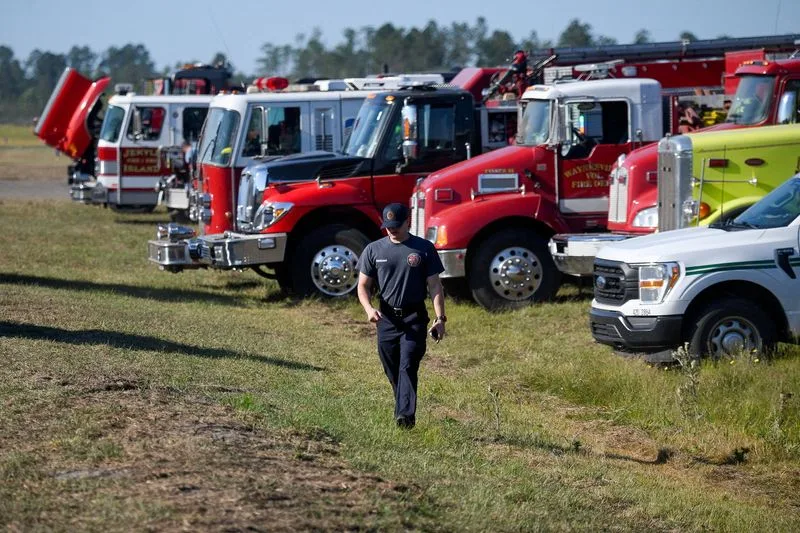
Crews are working to protect homes still in the path of the flames while also trying to slow the overall advance of the fire. Water dropping aircraft are being deployed alongside ground crews, but the size and intensity of the fires are pushing resources to the limit.
The Broader Southeast Picture
While Georgia has borne the brunt of the destruction, the wildfire crisis is not limited to one state. Florida, South Carolina, and Alabama are all dealing with their own outbreaks of fire activity. The dry conditions affecting Georgia are widespread, and any state in the region is vulnerable to the same kind of explosive fire behavior.
This has created a regional emergency in which firefighting resources, personnel, and aircraft are being stretched thin. States are coordinating to share resources where possible, but with so many active incidents at once, prioritizing response efforts has become an enormous challenge.
Why Hurricane Helene Still Matters
It might seem strange to connect a hurricane that hit last fall to wildfires happening now, but the link is direct. Hurricane Helene caused massive vegetation damage across the Southeast. Trees were knocked down, branches were broken, and a huge volume of organic material ended up on the forest floor.
That debris, combined with new vegetation growth in the months following the storm, created what fire experts call a heavy fuel bed. When that fuel dried out due to the unusually low rainfall this spring, it became a tinderbox waiting for a spark.
In essence, last year’s hurricane left behind the conditions that made this year’s wildfires so devastating. It is a powerful example of how natural disasters can have long term consequences that emerge in unexpected ways.
What Residents Should Be Doing
For residents in affected areas, safety is the top priority. Officials are urging people to:
- Follow all evacuation orders without delay
- Avoid any outdoor burning of any kind
- Be cautious with anything that could create a spark, including vehicles, equipment, and tools
- Keep emergency kits ready in case of sudden evacuations
- Stay tuned to local news for the latest updates
- Help neighbors who may need assistance evacuating
The conditions this weekend are expected to remain extremely dangerous. Strong winds are forecast and there is little chance of rain. That means fires already burning could spread further and new fires could ignite at any time.
The Outlook for the Coming Days
Authorities have made it clear that they expect extreme fire conditions to persist through the weekend. Until significant rainfall arrives, the underlying drought situation will continue to drive fire risk. Without a meaningful change in weather, fire crews will be racing against time and conditions to gain control of the major blazes.
There is some hope that improved weather patterns could eventually bring relief, but no immediate forecast suggests that will happen soon. In the meantime, the priority remains protecting lives, saving homes, and preventing the situation from getting even worse.
Key Takeaways
To summarize the most important points from this developing story:
- Georgia is experiencing the largest property loss from a single fire event in its history.
- More than 122 homes and structures have been destroyed.
- Two major fires, Highway 82 and Pineland Road, account for most of the damage.
- The fires were started by a party balloon and a welding spark.
- Governor Brian Kemp declared a state of emergency in 91 counties.
- A historic 30 day outdoor burning ban has been imposed.
- Nearly 1,000 more homes remain threatened.
- A volunteer firefighter died while battling a brush fire in Florida.
- Drought, leftover storm debris from Hurricane Helene, and dry winds are fueling the disaster.
- Conditions are expected to remain dangerous through the weekend.
Final Thoughts
The wildfires now consuming parts of the Southeast United States are a powerful reminder of how quickly nature can turn devastating. What began as ordinary moments, a balloon drifting in the wind and a welder doing his job, became the spark for one of the most destructive fire events Georgia has ever experienced. Combined with drought, leftover hurricane debris, and gusty winds, the conditions created a recipe for disaster.
For the families who have lost homes, the road to recovery will be long and painful. For firefighters and emergency crews, the work continues around the clock under dangerous conditions. For the broader region, this event raises serious questions about climate resilience, disaster preparedness, and how communities should adapt to a new reality where extreme fire events can happen far outside the traditional fire season.
As Georgia and its neighbors fight to contain the current blazes, the rest of the country watches with concern. The hope is that rain will arrive, the winds will calm, and the worst of the destruction will soon be behind these communities. Until then, vigilance, cooperation, and a steady commitment to safety remain the most important tools in the fight against this growing disaster.