



















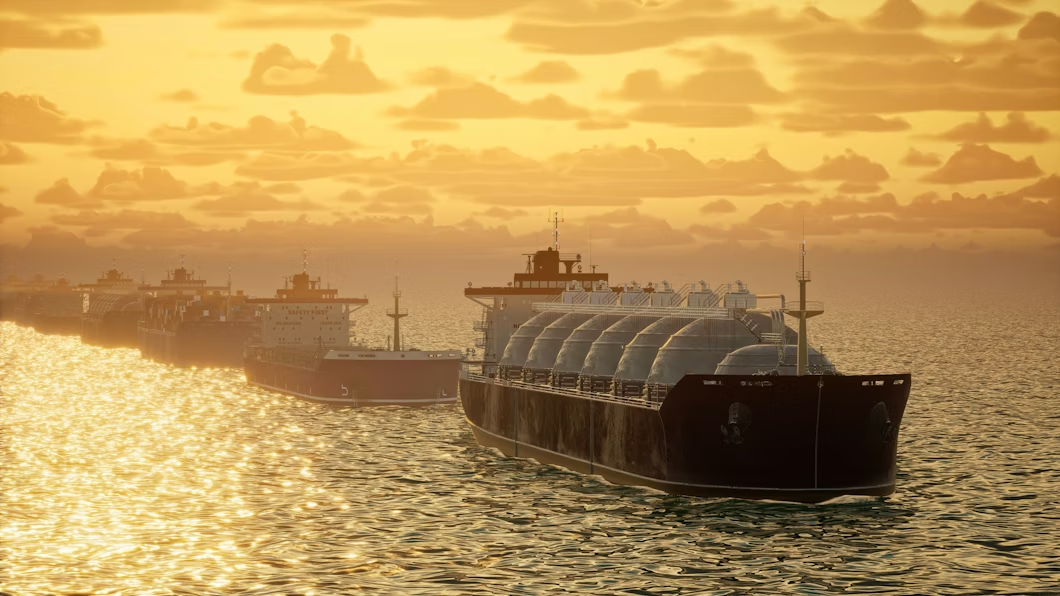
Middle East Crisis Natural Gas Markets in Turmoil as Global LNG Supply Faces Major Setback
Middle East crisis natural gas markets are experiencing unprecedented turbulence, with the latest International Energy Agency report painting a stark picture of how regional conflict is reshaping the global energy landscape. The ripple effects of the ongoing supply shock are being felt from European homes to Asian factories, with price volatility reaching levels not seen in years and a long-anticipated wave of new LNG supply now pushed significantly into the future.
According to the IEA’s newest quarterly gas market report, the conflict has fundamentally altered the trajectory of global natural gas markets, creating uncertainty that’s likely to persist for several years. Let’s dive into what’s happening, why it matters, and what the road ahead looks like for energy markets worldwide.
A Sudden Shock Reshapes the Global Gas Landscape
When the Strait of Hormuz — one of the world’s most critical maritime chokepoints — became disrupted at the start of March, the consequences were immediate and severe. Roughly 20% of global LNG supply was effectively removed from the market, triggering one of the most significant supply shocks the natural gas industry has seen in recent memory.
The Strait of Hormuz isn’t just any waterway. It’s the narrow passage through which a substantial portion of the world’s energy exports flow, particularly from major Middle Eastern producers like Qatar and the United Arab Emirates. When shipping through this corridor becomes uncertain, the entire global energy market feels the impact almost instantly.
Prices responded predictably. During March’s intense volatility, natural gas benchmarks in Asia and Europe surged to their highest levels since January 2023. Importers scrambled to secure supply, traders priced in worst-case scenarios, and the broader energy market entered a state of heightened anxiety.
A Reversal of Recent Progress
What makes this disruption particularly painful is that it has reversed several months of positive momentum in the global gas market. During the 2025/26 heating season, things had actually been looking up for energy consumers worldwide.
Strong growth in LNG supply — driven primarily by new liquefaction capacity coming online in North America — had been helping to ease prices and rebalance the market. Between October and February, global LNG trade climbed by an impressive 12% year-on-year. Benchmark prices in both Europe and Asia dropped by approximately 25% during that same five-month window, offering much-needed relief to consumers and businesses still recovering from earlier energy crises.
That progress has now been thrown into reverse, with the Middle East conflict erasing many of the gains made during the previous heating season.
Cold Weather Adds Another Layer of Pressure
As if the supply shock weren’t enough, Mother Nature also played her hand this winter. Major winter storms swept across North America, Europe, and East Asia, driving significant spikes in gas demand exactly when supply was becoming more constrained.
These weather events served as a stark reminder of something energy experts have been emphasizing for years — natural gas remains a critical flexible fuel source, especially in regions where renewable energy makes up a growing share of the electricity mix. When wind and solar output drops during extreme weather, gas-fired power plants step in to keep the lights on. That flexibility comes at a cost when supply is tight, and this winter demonstrated just how vulnerable the system can be.
Production and Exports Take a Hit
The numbers tell a sobering story. In the wake of the Strait of Hormuz disruption, global LNG production dropped by 8% year-on-year. Exports from Qatar and the UAE — two of the most important LNG suppliers in the world — declined sharply, and increased output from other regions could only partially offset the shortfall.
The ripple effects didn’t stop there. As supply chains absorbed the shock, LNG deliveries to importing nations also began to decline, with April seeing an even more pronounced drop. This kind of cascading disruption highlights just how interconnected the global gas market has become, and how vulnerable it is to events in any single region.
How Importing Countries Are Responding
Faced with surging prices and tightening supply, major gas importers have been forced to take action. The response has come in several forms:
- Demand reduction: Higher prices have naturally suppressed consumption as businesses and households cut back on usage.
- Fuel switching: Several Asian nations are actively shifting toward alternative energy sources where possible to reduce reliance on increasingly expensive gas.
- Policy interventions: Governments are implementing demand-side measures designed to limit gas consumption and stretch available supplies.
In Europe, natural gas demand fell by approximately 4% year-on-year in March. Much of this decline was driven by stronger renewable electricity generation, which helped offset some of the gas-fired power that would otherwise have been needed. Milder weather conditions in certain regions also helped reduce heating demand.
These adaptations are essential, but they come with their own costs. Industries that depend on natural gas face higher production expenses, consumers feel the pinch in their utility bills, and energy-intensive sectors like manufacturing and chemicals must navigate increasingly challenging economics.
The Long-Term Damage to LNG Infrastructure
Perhaps the most concerning aspect of the IEA report is its assessment of medium-term impacts. The crisis hasn’t just disrupted current supply — it has caused tangible damage to LNG liquefaction infrastructure in Qatar, one of the world’s largest gas exporters.
This physical damage is set to reduce projected supply growth and delay the much-anticipated global LNG expansion wave by at least two years. That’s a significant setback for energy markets that had been counting on new supply to ease tightness in the years ahead.
When you combine the immediate supply losses with slower capacity growth going forward, the total impact becomes staggering. The IEA estimates a cumulative loss of approximately 120 billion cubic metres of LNG supply between 2026 and 2030. To put that in perspective, that’s enough gas to power tens of millions of homes for an entire year.
Other Regions Stepping Up — But Not Enough
The good news is that new liquefaction projects in other parts of the world, particularly in North America and Australia, are expected to eventually offset some of these losses. Investment in new LNG capacity has been robust in recent years, and several major projects are still on track to come online.
However, these new projects can’t be built overnight. Even under optimistic scenarios, the impact of the Middle East crisis will keep markets tight throughout 2026 and 2027. Buyers should brace for continued price volatility and potential supply uncertainty during this period.
Lessons for Energy Security
The IEA report doesn’t just describe the problem — it also offers important insights into how the world can build more resilient gas markets going forward. Several key themes emerge:
The importance of adequate investment across the entire LNG value chain cannot be overstated. From upstream production to liquefaction terminals to shipping and regasification facilities, every link in the chain needs continued capital investment to ensure long-term reliability.
International cooperation between producing and consuming nations is more critical than ever. The current crisis has shown that no country can fully insulate itself from global gas market disruptions, making collaboration on issues like infrastructure security and emergency response increasingly valuable.
Diversification of supply sources offers powerful protection against price volatility. Importers with portfolios of long-term contracts spanning multiple regions and suppliers are far better positioned to weather disruptions than those relying heavily on a single source.
What This Means for Consumers and Businesses
For everyday consumers, the immediate impact of this crisis shows up in higher utility bills and increased costs for goods that depend on gas-intensive manufacturing. Industries ranging from fertilizer production to steel manufacturing to plastics all rely heavily on natural gas, and those costs ultimately flow through to consumer prices.
Businesses operating in energy-intensive sectors face tougher decisions about production levels, sourcing strategies, and long-term planning. Some may accelerate investments in energy efficiency or alternative fuels, while others may need to pass higher costs on to customers.
Policymakers face the challenging task of balancing immediate economic relief with longer-term energy transition goals. Subsidies for gas consumers help in the short term but can complicate efforts to shift toward cleaner energy sources over time.
Looking Ahead: Uncertainty and Opportunity
The path forward for global natural gas markets remains uncertain. Much depends on how quickly tensions in the Middle East can be resolved, how effectively damaged infrastructure can be repaired, and how rapidly new LNG supply from other regions can come online.
What’s clear is that the assumption of cheap, abundant natural gas — an assumption that underpinned much of the global energy strategy in recent years — is once again being challenged. Energy security has returned to the forefront of policy discussions, and countries that took supply for granted are reassessing their vulnerabilities.
For the LNG industry itself, the crisis represents both a challenge and an opportunity. The challenge is obvious — disrupted operations, damaged infrastructure, and shaken customer confidence. The opportunity lies in demonstrating the value of reliable supply, building stronger partnerships with importers, and accelerating investments in resilient infrastructure.
Final Thoughts
The Middle East crisis has done more than just disrupt natural gas markets — it has reshaped expectations about the future of global energy. With 120 billion cubic metres of LNG supply potentially lost over the coming years and a major expansion wave delayed by at least two years, the world is heading into a period of prolonged market tightness.
For consumers, businesses, and policymakers, the message is clear. Energy security cannot be taken for granted, diversification matters more than ever, and continued investment in supply infrastructure is essential. While new projects will eventually help rebalance the market, the next two years will likely test the resilience of the global gas system in ways we haven’t seen in decades.
As the world watches developments in the Middle East unfold, one thing is certain — the decisions made today about energy policy, infrastructure investment, and international cooperation will shape the natural gas landscape for years to come.