


















Spirit Airlines Bailout: Trump Weighs Cold War-Era Law to Save the Struggling Carrier
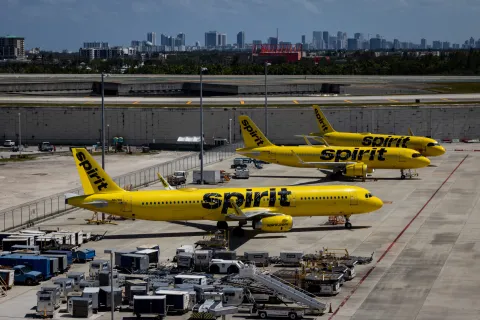
The Spirit Airlines bailout situation has taken a dramatic new turn, with the Trump administration reportedly considering an unusual legal route to rescue the troubled budget carrier. According to a source familiar with the discussions who spoke on condition of anonymity, officials are exploring whether the Defense Production Act could be invoked to support Spirit Aviation Holdings Inc. as it fights to survive.
What Is the Defense Production Act?
Passed back in 1950 during the early days of the Korean War, this law hands the president sweeping emergency authority to steer the production of goods and services considered essential to national defense. That includes powers to extend government loans and pour federal money into critical industries through direct investments.
Stretching this statute to cover a commercial airline, particularly one focused on cheap domestic flights rather than military operations, would almost certainly invite legal challenges and political pushback. After all, it’s not immediately obvious what national security argument the administration could realistically make for propping up a discount carrier.
A History of Creative Uses
That said, presidents from both parties have used this law in ways that seemed to wander far from its original wartime purpose. During the Covid-19 pandemic, it was tapped to ramp up face mask production. When American parents faced empty store shelves, it was used to boost baby formula supplies.
More recently, the Trump administration has leaned on the act to support energy goals, including offshore oil development, strengthening the power grid, and shoring up coal-fired electricity generation. So while applying it to an airline would be unusual, it wouldn’t be entirely without precedent for stretching the law’s boundaries.
The White House Position
White House spokesman Kush Desai addressed the situation in a statement on Friday, confirming that President Trump has been vocal about his desire to help Spirit Airlines. He noted that officials continue weighing different paths to keep the airline flying for both its customers and workforce.
However, Desai cautioned that any reports detailing the specific structure or mechanics of a potential deal between Spirit and the federal government should be treated as speculation unless the administration formally announces something. CBS News was the first to report that the Defense Production Act was on the table as part of the broader rescue package.
How Spirit Got Here
These bailout conversations are unfolding while Spirit slogs through a Chapter 11 reorganization. The airline filed for bankruptcy protection after piling up significant losses and accumulating heavy debt loads. Operations have continued throughout the process, meaning passengers have still been able to book flights even as the legal proceedings drag on.
Things were actually starting to look brighter for Spirit before the Iran war erupted. Jet fuel prices spiked dramatically once that conflict began, throwing a wrench into the carrier’s recovery timeline. Just before the war, Spirit was widely expected to exit bankruptcy by this summer after reaching agreements with creditors to slash billions in debt and renegotiate its expensive aircraft leases.
The Proposed Deal Structure
Earlier reporting from Bloomberg revealed that the administration has been crafting a financial package that could provide Spirit with up to $500 million in financing. In exchange, the federal government would receive warrants giving it the right to purchase up to 90% of the airline once it emerges from bankruptcy proceedings.
That said, nothing is locked in yet. The arrangement could still shift significantly, get restructured, or even collapse entirely if the parties can’t reach final terms.
Trump Floats Government Ownership
Adding another wrinkle to the story, Trump himself dropped a bombshell on Thursday when he publicly suggested he’s actively considering having the U.S. government simply buy Spirit Airlines outright. The president framed the potential purchase as a way to prevent the carrier from being completely liquidated, which would mean the loss of thousands of jobs and reduced flight options for budget-conscious travelers across the country.
Why Spirit Matters to Travelers
For millions of Americans, Spirit represents accessible air travel. The carrier built its reputation on rock-bottom base fares that opened up flying to people who otherwise couldn’t afford it. Losing Spirit would shrink competition in the ultra-low-cost segment, which historically forces larger airlines to keep their own prices in check on overlapping routes.
Critics, however, question whether using federal resources to rescue a private airline, especially through emergency wartime legislation, sets a troubling precedent. Where does government intervention end if a discount carrier qualifies as essential to national defense?
What Happens Next
The bailout deliberations remain fluid, with multiple options still on the table. Whether the administration ultimately invokes the Defense Production Act, structures a more conventional financing deal, or pursues outright government ownership, any path forward will likely face intense scrutiny from lawmakers, legal experts, and the broader aviation industry.
For Spirit’s employees, passengers, and creditors, the coming weeks could determine whether one of America’s largest budget airlines survives in any recognizable form, or whether it joins the list of carriers that simply couldn’t navigate the turbulence of post-pandemic aviation economics combined with geopolitical shocks.
The Bigger Picture
The Spirit Airlines bailout debate reflects broader questions about how far Washington should go in propping up struggling private companies during economic stress. As the Trump administration continues weighing its options, the outcome could reshape expectations for federal intervention in the airline industry for years to come.